
In fact, America’s oldest and largest geographic combatant command changed its name last year from U.S. Pacific Command to U.S. Indo-Pacific Command, specifically to highlight the importance of South Asia and the Indian Ocean region to its mission.
Indopacom’s commander, Navy Adm. Phil Davidson, visited New Delhi in the second week of January and participated in a panel discussion at the Raisina Dialogue titled “Indo-Pacific: Ancient Waterways, Emerging Geometries.” The yearly forum has emerged as India’s flagship conference on geopolitics and security and is attended by global leaders in policy, business, media, and civil society.
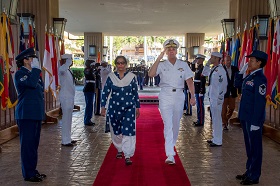
India, a major U.S. defense partner since 2016, is working on some long-term strategies with the U.S.:
1. In June 2018, military leaders pledged to broaden military-to-military engagements, including more maritime activities.
2. Both nations are committed to combating terrorism by strengthening intelligence and information sharing, screening for terrorists and monitoring their use of the internet. Since 2008, the U.S. has provided anti-terrorism training for 1,200 Indian security personnel.
3. The recent signing of the Communications Compatibility and Security Agreement allows both India and the U.S. to operate on the same communication systems, enabling further opportunities for interoperability in military engagements.
4. Under the India-U.S. Joint Strategic Vision – both countries are working together to develop a roadmap to improve security architecture and strengthen regional dialogues.
Last updated: December 26th, 2025

