
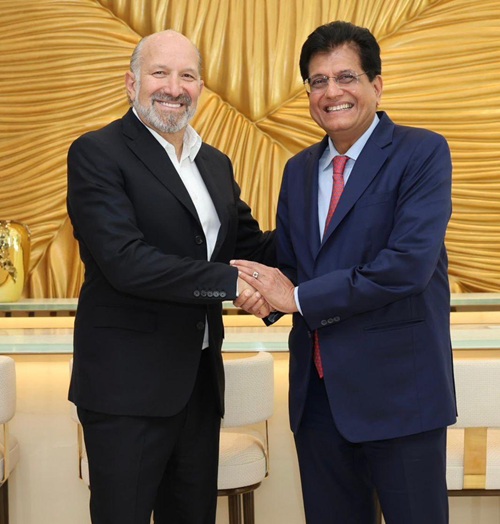
India’s Commerce Minister Piyush Goyal concluded a four-day visit to Washington, D.C., from May 17-20, reporting “good discussions” with U.S. officials regarding a new India-U.S. Bilateral Trade Agreement. During his visit, Goyal met with U.S. Secretary of Commerce Howard Lutnick to accelerate progress on the agreement’s first phase. The initiative, designed to unfold in three phases, aims to strengthen economic ties between the two nations and address key trade issues.
The first phase of the agreement, targeted for completion before July, is expected to cover market access for industrial goods and select agricultural products, while also addressing non-tariff trade barriers. This initial tranche serves as a foundation for a broader trade pact.
The second phase, projected for around September to November, will likely expand the scope to include more detailed provisions.
The third and final phase aims to result in a comprehensive agreement, which will require approval from the U.S. Congress and may be finalized next year.
Goyal’s visit takes place against the backdrop of a 90-day freeze on tariff increases announced by U.S. President Donald Trump on April 9. The temporary pause includes a 26% tariff on Indian imports, giving both sides a window to finalize key trade arrangements. This pause is seen as a strategic opportunity for New Delhi to lock in favorable terms before higher tariffs take effect.
Trade between the U.S. and India reached approximately $129 billion in 2024, making the U.S. India’s largest trading partner. India enjoys a significant trade surplus with the U.S., amounting to about $45.7 billion. The proposed trade deal is viewed as a critical step in further balancing trade relations, promoting investment, and facilitating smoother regulatory practices.
According to Bloomberg, the ongoing negotiations aim to ease stringent trade restrictions, such as quality control regulations that currently hinder market access for Indian exports. If successful, the agreement could pave the way for increased trade volume, stronger economic ties, and greater strategic cooperation between the two democracies.
Overall, Goyal’s Washington visit signals strong momentum in India-U.S. trade relations, with phased negotiations offering a structured approach to overcoming trade hurdles and building a more robust economic partnership in the coming years.
Last updated: December 26th, 2025

