
In 2024, the healthcare sector in India was abuzz with the merger of Aster DM Healthcare and Quality Care India Limited (QCIL), backed by Blackstone, resulting in an entity valued at $5.08 billion. This merger gave birth to Aster DM Quality Care, catapulting it to the position of the third-largest hospital chain in India.
India’s healthcare landscape is attracting significant investments, particularly from global private equity (PE) firms and Indian corporate giants. A striking example is the Adani Group, which pledged $6.93 billion to establish two Adani Health Cities (AHC) in Mumbai and Ahmedabad. These health cities, being developed in collaboration with the Mayo Clinic, will encompass multi-specialty hospitals, medical colleges, and advanced research facilities.
Simultaneously, the Bajaj Group earmarked $11.53 billion to launch a chain of hospitals across India. The Tata Group, another major player in the sector, announced an investment in Mumbai’s Breach Candy Hospital. N Adding to the spree of acquisitions, Reliance Industries Ltd (RIL) acquired Mumbai-based Karkinos Healthcare, an oncology-focused platform, for Rs 375 crore in December.
This surge in investment is primarily driven by the increasing demand for quality healthcare services in India, influenced by demographic shifts and evolving medical needs, as noted by Bhanu Prakash Kalmath S J, partner at Grant Thornton Bharat. The annual report by Grant Thornton Bharat highlights that in 2024, the Indian healthcare sector witnessed record mergers and acquisitions worth $9.96 billion, a threefold increase compared to the previous year. Hospitals garnered 44 percent of these deals, totaling $5.56 billion.
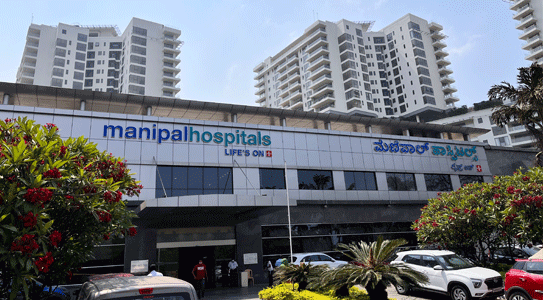
Major deals in 2023 included Blackstone’s acquisition of Care Hospitals and KIMS for over $1 billion and Tamaesk’s acquisition of Manipal Hospitals for $2 billion. In the same year, BPEA EQT, anacquired Indira IVF for $657 million.
With the rising healthcare ecosystem in India, there is an inevitable increase in the demand for American medical devices and pharmaceutical products. The growing cost of healthcare is a significant factor that underscores the need for advanced and reliable medical equipment and pharmaceutical solutions, which American companies are well-positioned to supply.
Private hospitals in India are becoming increasingly attractive due to two key factors: rising insurance penetration and healthcare infrastructure. The Covid-19 pandemic accelerated the growth of insurance penetration in India, driving the demand for quality healthcare services. Dheeresh Pathak, Fund Manager for WhiteOak Capital AMC, pointed out that insurance coverage has led people to seek better hospital services, including private rooms and comprehensive coverage.
A study by Bajaj Finserv revealed that while India remains significantly underinsured compared to developed nations, the gap is gradually narrowing. Between FY20 and FY24, health insurance premium collections in India rose from $7.04 billion to $13.07 billion, reflecting the growing emphasis on health coverage.
Last updated: December 26th, 2025

