
The United States, Japan, India, and Australia — collectively known as the “Quad”— launched a joint critical minerals initiative aimed at countering China’s dominance in mineral processing. These minerals are vital to emerging technologies such as semiconductors, making secure and diversified access a geopolitical priority.
During a meeting in Washington, D.C., U.S. Secretary of State Marco Rubio hosted his counterparts—Penny Wong from Australia, S Jaishankar from India, and Takeshi Iwaya from Japan. Despite past tensions with the U.S. under the current administration, the Quad reaffirmed mutual trust and cooperation.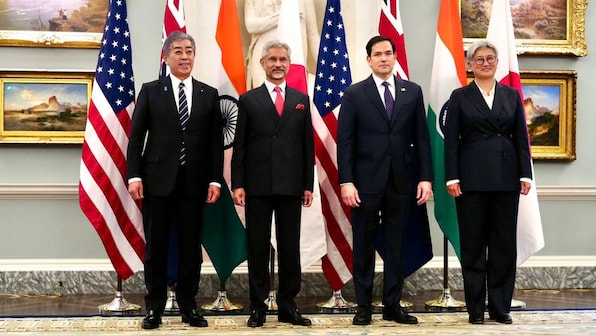
Their joint statement emphasized the risks of depending on a single country — implicitly referring to China — for mineral refining. Such dependency, they argued, leads to vulnerabilities such as economic coercion and supply chain manipulation. Although China was not named directly, the underlying intent of the initiative is to shift away from reliance on Chinese mineral supply chains.
Beyond minerals, the Quad addressed broader regional concerns, specifically China’s assertive activities in the South China Sea and East China Sea. These moves were labeled as threats to Indo-Pacific peace and stability. Jaishankar stated that the gathering reinforces efforts to keep the Indo-Pacific “free and open,” a recurring theme in Quad communications.
Rubio emphasized the need for tangible action and announced that 30–40 companies across Quad nations would meet to discuss cooperation on diversifying mineral supply chains. While details remain sparse, the initiative marks a shift in aligning technology goals with national security policies.
The Quad’s last meeting occurred in January after Trump began his second term as U.S. president. INevertheless, his upcoming trip to India for another Quad summit highlights continued engagement.
This meeting reflects not just as a diplomatic forum but as an action-oriented coalition safeguarding technological independence and regional stability in the face of growing geopolitical complexities.
Last updated: December 26th, 2025

