
Indian Prime Minister Narendra Modi and his cabinet recently expanded its Outer Space budget and added ambitious new plans to put in on par with the top nations of the world. Starting with crewed missions, going on the a lunar sample return project, a satellite to orbit the planet Venus, and even an Indian space station.
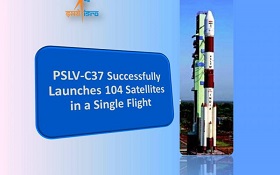
The Indian Space Research Organization, ISRO is developing the Gaganyaan spacecraft for crewed missions, with un-crewed test flights planned soon.
The Indian cabinet has authorized several major space projects. While the budgets may sound small by American standards, the country has a track record of frugal innovation.
– Chandrayaan-4 – A lunar sample return mission with a budget of $253 million.
– Venus Orbiter Mission – Planned for 2028 with a budget of $149 million.
– Bharatiya Antariksh Station – India’s first space station module.
– Next Generation Launch Vehicle (NGLV) – A reusable rocket with triple the payload capacity of current vehicles; a step toward India’s vision of establishing its first space station and enabling crewed lunar landings by 2040.
In the long term India hopes to land its astronauts on the Moon by 2040 and establish its own space station.
These space projects are expected to boost India’s industrial and academic sectors, creating jobs and driving technological innovation, and economic growth. In additon, missions such as the Venus Orbiter aim to study planetary atmospheres, geology, and potential biosignatures, contributing to our understanding of planetary evolution. As India continues to develop its space capabilities, it has the potential to become a more significant partner in international space exploration efforts, particularly in collaboration with the United States.
Last updated: December 26th, 2025

