
The United States and India are approaching a potentially important breakthrough in their economic relationship, even as disagreements over tariffs, energy sourcing and skilled-worker visas remain unresolved.
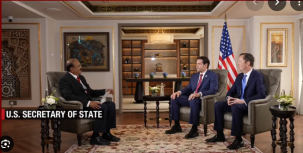
In an interview with India Today in Mumbai, U.S. Secretary of State Marco Rubio and Ambassador to India Sergio Gor described a bilateral partnership that is expanding beyond traditional trade and defense cooperation into nuclear energy, artificial intelligence, pharmaceuticals and strategic supply chains. This is a summary of the State Department readout.
Rubio characterized the relationship as being as strong as it has ever been and predicted that within five years, it could become one of the strongest bilateral relationships in the world.
Trade Agreement Nears Completion
Perhaps the most immediate development is progress toward a bilateral trade agreement.
Rubio indicated that only a few negotiating issues remain and expressed confidence that an agreement would be reached soon. He emphasized that the deal should provide businesses and investors with greater certainty about tariffs and the rules governing cross-border commerce.
Ambassador Gor highlighted the scale of economic integration, citing bilateral trade of approximately $240 billion, compared with $20 billion about 15 years ago.
Investment is increasingly flowing in both directions. American companies continue expanding operations in India, particularly in information technology, while Indian corporations are making substantial investments in U.S. manufacturing and infrastructure.
Nuclear Energy Opens New Opportunities
One of the most promising areas is civil nuclear cooperation.
Gor welcomed India’s SHANTI legislation, which opens opportunities for private-sector participation and small modular reactor (SMR) technology.
He suggested that India could become one of the first international markets for American SMRs. Discussions have already taken place in Washington, New Delhi and Mumbai.
However, regulatory complexities remain, and commercial deployment will require further work. The opportunity is substantial, but progress will depend on resolving implementation challenges.
Energy Cooperation and Diversification
Energy security is another growing priority.
Rubio acknowledged India’s progress in diversifying crude oil supplies and encouraged greater sourcing from the United States, Venezuela and other Western Hemisphere producers.
He also highlighted India’s expanding refining capabilities, following a visit to the Jamnagar refinery complex.
India’s ability to process crude from multiple sources could strengthen its position in global energy markets while reducing dependence on individual suppliers or regions.
Defense, Technology and Supply Chains
Defense cooperation continues to deepen through joint military exercises, equipment manufacturing and technology partnerships.
Gor cited the presence of Lockheed Martin and Boeing in India, existing co-production arrangements and expanding military exercises.
The Quad partnership involving India, the United States, Japan and Australia is also moving toward practical cooperation in maritime surveillance, protection of undersea infrastructure and supply-chain resilience.
India’s participation in the U.S.-led Pax Silica initiative could create further opportunities in semiconductors, AI infrastructure and strategic technologies.
Both countries see value in reducing excessive dependence on individual suppliers for critical minerals, pharmaceuticals, biomedical products and advanced technologies.
Challenges Remain
Despite this momentum, several issues could complicate the relationship.
India continues seeking greater predictability in tariffs and market access. Changes to U.S. work visa policies have also created concerns for Indian professionals, students and businesses dependent on cross-border talent mobility. Regional security remains sensitive, particularly regarding Pakistan and terrorism. Rubio emphasized that U.S. engagement with Pakistan would not diminish its commitment to India’s security concerns.
Outlook: From Strategic Partnership to Commercial Execution
The interview suggests that U.S.–India relations are entering a more commercially consequential phase.
A successful trade agreement, workable nuclear regulations and tangible investments in technology and manufacturing could translate diplomatic momentum into long-term economic benefits.
The central challenge now is converting an increasingly ambitious partnership into concrete projects, predictable business conditions and measurable results for companies in both countries.

