
The United States and India will relook at exploring practical cooperation in the civil nuclear energy sector, which did not move forward since inking a historic pact over 14 years ago primarily due to differences over liability rules.
U.S. Assistant Secretary of State for Energy Resources Geoffrey R. Pyatt was in India from February 13-17 visiting Mumbai, Pune, and New Delhi to discuss strategic, bilateral cooperation in areas of nuclear commerce, clean energy transition, energy security, and increased energy access across South Asia under the framework of the U.S.- India nuclear agreement of 2008.
“The business model of the civil nuclear industry is changing. In the U.S., we made a huge commitment to small and marginal reactors which could be particularly suitable to the Indian environment as well,” he said without elaborating further.
In an exclusive interview with Press Trust of India, Pyatt described India as a very crucial partner for the U.S. in ensuring global energy security.
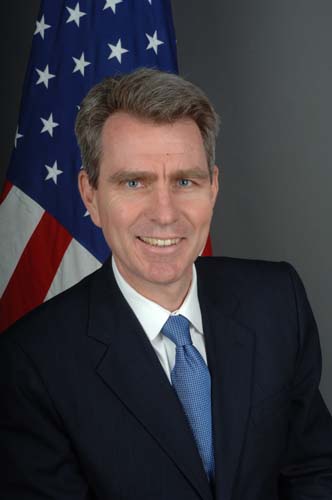
“The U.S.-India energy and climate agenda is one of the most important that we have anywhere in the world” Pyatt said. He added that the U.S. is keen on forging strong cooperation with India in areas of green hydrogen energy too, with reference to hydrogen fuel cells, how to scale up storage mechanisms for hydrogen energy, and green shipping.
The U.S. is looking at possible energy cooperation under the framework of Quad as well. Pyatt explained, “Quad is a fundamental organizing principle for us. If you look at the different ways in which our four governments are active – all four have made a big commitment to hydrogen [energy]. Australia has a big hydrogen program, India has a large commitment [to it]. the Japanese have a long-standing interest in hydrogen [energy]. Our hydrogen ecosystem is going to grow very fast.”
Last updated: December 26th, 2025

