
Last week I moderated an amazing panel of diplomats representing Japan, India, Australia and the USA at my second Quad event in Los Angeles. This one was at the Los Angeles World Affairs Council.
So I am pleased to learn that foreign ministers from the Quad nations – Australia, India, Japan, and the United States – are slated to convene in Washington in early July. This meeting is a precursor to a larger leaders’ summit expected to take place in India later this year, signaling a continued effort by the United States to bolster the Quad as a counterbalance to China’s escalating influence in the Indo-Pacific.
The July meeting of foreign ministers will be crucial in shaping the agenda for the subsequent summit, with key discussions anticipated to revolve around maritime security and disaster management.
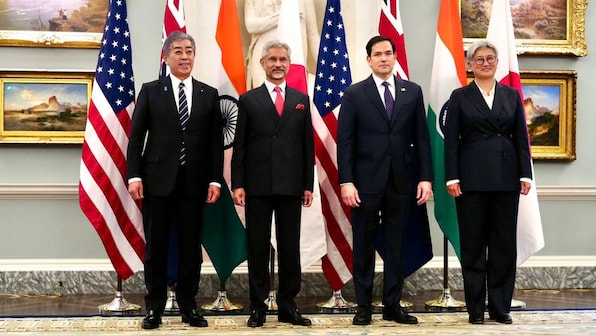
The Quad, initially formed in 2007 and revitalized in 2017 during President Donald Trump‘s first term, operates as a strategic partnership committed to fostering a free, open, and inclusive Indo-Pacific. While its stated objectives encompass a broad range of areas including critical and emerging technologies, health security, climate change, infrastructure, and cybersecurity, many observers interpret the Quad primarily as a mechanism to counter China’s expanding regional power.
The Quad’s significance further grew during the COVID-19 pandemic through its vaccine initiative. Since then, the group has formalized its interactions, including regular summits, foreign ministers’ meetings, and joint naval exercises such as the Malabar drills. Even after a change in the U.S. administration, a Quad foreign ministers’ meeting, attended by India’s External Affairs Minister S. Jaishankar, was held this year on January 21, demonstrating the continuity of the grouping.
Ultimately, the Quad serves as a vital platform for these four democracies to harmonize their strategic interests, uphold the international rules-based order, and offer transparent alternatives to initiatives such as China’s Belt and Road Initiative, thereby aiming to ensure regional stability and prosperity.
Last updated: December 26th, 2025

