
Based in Ventura, California, renowned outdoor apparel maker, Patagonia, Inc recently published a story about how Indian fabric played a key role in India’s independence movement. This year, on August 15, India celebrated her 75th year of independence: after a nearly 300-year rule, the British finally exited India in 1947.
Activist Mohandas Karamchand Gandhi, also known as Mahatma Gandhi, was a top leader protesting Britain’s colonization of India . According to Gandhi, there was one object that best represented his ideology and India’s path to independence. “For me,” he said, “nothing in the political world is more important than the spinning wheel.” He meant the charkha, a hand-operated device used to spin fibers into yarn to make a fabric called khadi, which is lightweight, breathable and traditionally made with cotton.
Gandhi transformed the manufacture of khadi from a craft passed down through generations into a tool of protest against British colonizers who had long exploited India’s cotton harvests. Khadi could be a path to self-reliance for Indians. (Some accounts even say that he called khadi spinners “freedom fighters.”)
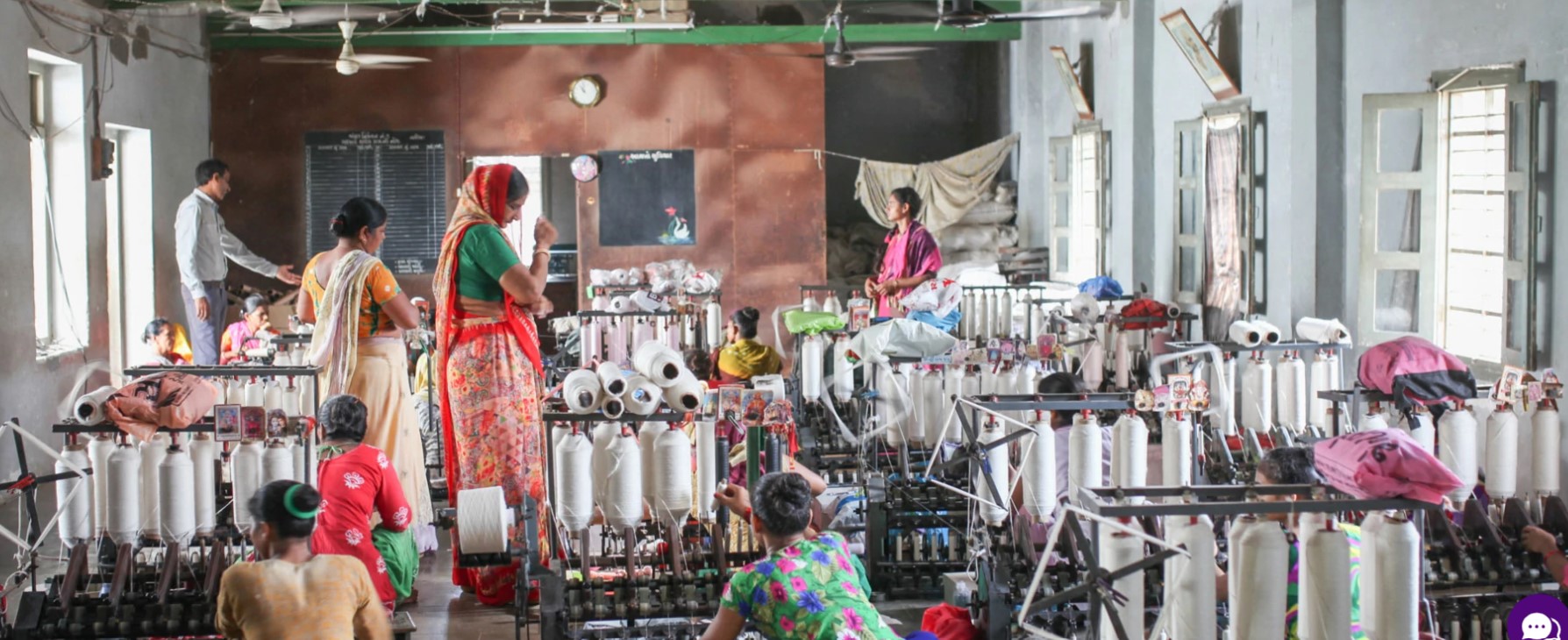
In January 2012, Patagonia Inc. was one of the first companies in California to register as a B Corp (benefit corporation) in the social and environmental space. It partnered with one of its longtime suppliers in India, Arvind Ltd., that started making khadi denim. Arvind wanted to infuse more structure and equity into this informal economy.
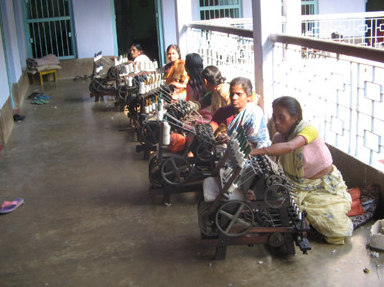
The craft continues today, typically in small workshops or in the homes of artisans—usually women and usually in rural communities.
“Khadi is another step in the story of social responsibility,” says Helena Barbour, who leads Life Outdoors at Patagonia. “It’s about valuing product and human touch—elements that have gotten lost in a world of fast fashion. This is a craft whose value goes much deeper than just stuff,– it’s empowerment.”
Last updated: December 26th, 2025

