
India has been increasingly turning to the United States to acquire advanced military technology, particularly in the aerial domain. New Delhi has already purchased American platforms such as the P-8 Poseidon maritime patrol aircraft and the AH-64 Apache attack helicopter, and is now looking to further expand its aviation capabilities with a new fighter jet.
Multiple countries are vying to become India’s next fighter supplier, with contenders including America’s F-16 and F/A-18, Sweden’s Gripen, France’s Rafale, and the European Eurofighter Typhoon. To boost its chances, U.S. manufacturer Lockheed Martin has proposed an enhanced version of its F-16 called the F-21, specifically tailored for the Indian Air Force.
Unveiled in 2019 at Aero India, the F-21 is touted as the most advanced 4th generation fighter jet. While bearing a new name, it is essentially an upgraded derivative of the venerable F-16 Fighting Falcon. The original F-16 was conceived in the early 1970s to meet the need for a nimble air superiority day fighter.
The Fighting Falcon is a potent multi-role combat aircraft. It has nine hardpoints capable of carrying an array of air-to-air and air-to-ground munitions such as the AIM-9 Sidewinder, AMRAAM, Sparrow, and other Western and European missiles. Over its decades of service, multiple enhanced variants such as the Block 70/72 have emerged to keep the F-16 contemporary.
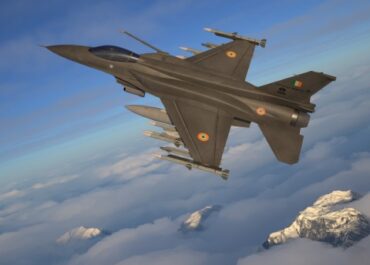
Lockheed Martin claims the F-21 for India will outclass even the latest Block 70/72 models. As an added incentive, the company has offered to establish an F-21 production line in India. This would allow transfer of technologies and a path for India to eventually manufacture its own fighter aircraft in-house – a key priority for New Delhi.
With its affordable cost, cutting-edge capabilities, and opportunity for co-production, Lockheed’s F-21 proposal appears geared to meet India’s requirements and budget for its new fighter acquisition program. The outcome of this high-stakes competition remains to be seen.
Last updated: December 26th, 2025

