
India and the US are taking forward their trade talks with a visit by US Trade Representative Jamieson Greer, scheduled next week to in hopes to finalize an interim trade deal.
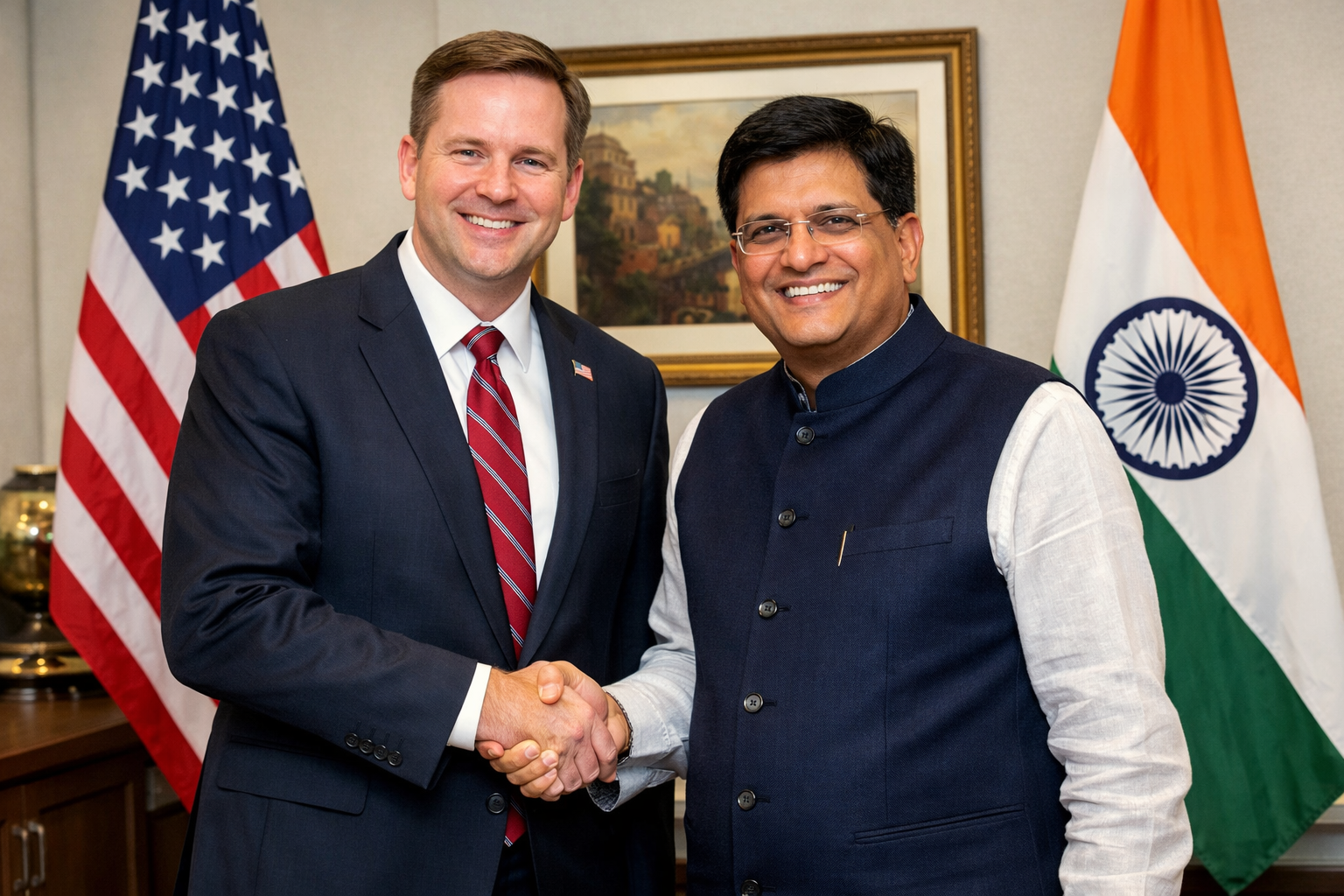
Greer will travel to New Delhi on June 22 for two days of meetings with India’s Commerce and Industry Minister Piyush Goyal. The discussions are expected to focus on finalizing the framework for the India–U.S. Bilateral Trade Agreement (BTA), which has been under negotiation since early 2025.
Tariffs and Trade Policy Context
The negotiations come against a backdrop of shifting U.S. tariff policy. Earlier this year, Washington agreed to lower duties on Indian goods to 18% from 50%. Tariffs linked to India’s imports of Russian oil were also reduced. However, following a February 20 Supreme Court ruling, President Trump imposed a temporary 10% reciprocal tariff on all trading partners, set to expire July 24.
Meanwhile, a “Section 301” investigation into India’s industrial overcapacity could lead to additional tariffs, including a 12.5% duty on goods produced with forced labor. Analysts note that the law gives the President broad authority to impose tariffs or non-tariff barriers, potentially complicating negotiations.
Shifts in Bilateral Trade
The US was the second-largest trading partner of India in 2025-26.
Recent trade data shows U.S.–India commerce is evolving rapidly.
- Exports from India to the U.S. in April–May rose slightly to $17.29 billion.
- Imports from the U.S. surged nearly 20% to $11.14 billion.
- India has significantly increased imports of American energy, narrowing the trade gap.
Both nations have set a long-term goal of expanding bilateral trade to $500 billion. Market access for U.S. agricultural products—including tree nuts, soybean oil, sorghum, and wine—remains one of sticking points

