
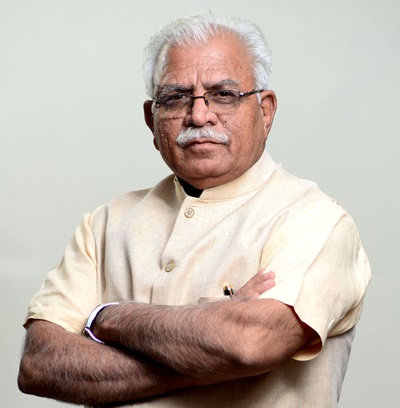
India’s federal power minister Manohar Lal has urged states distant from coal resources to consider establishing nuclear power plants, particularly at sites where coal-based thermal plants have reached the end of their operational life. This initiative aligns with India’s ambitious clean energy goals and its commitment to achieve net-zero carbon emissions by 2070.
The government’s 2024 federal budget proposed partnerships with private players to develop small-scale nuclear reactors, aiming to increase the country’s nuclear capacity from the current 8 gigawatts to 20 gigawatts by 2032. Currently, India operates 24 nuclear power plants, all managed by the Nuclear Power Corporation of India Limited (NPCIL), a government-owned entity based in Mumbai.
Many foreign power plant builders have stayed away from building atomic and nuclear plants in India because of stringent laws over compensation as well as very strict rules and regulations imposed by New Delhi in the event of an accident, mishap, or leak.
During the Conference of Power Ministers of States & Union Territories, Lal also addressed concerning financial metrics in the power sector. The aggregate technical and commercial (AT&C) losses of distribution companies have increased to 17.6% in FY24 from 15.4% in the previous year. The minister suggested calculating technical and commercial losses separately to enable targeted solutions. Distribution companies currently face significant financial challenges, with outstanding debt at ₹6.84 trillion and accumulated losses at ₹6.46 trillion.
To meet growing investment demands in the power sector, states have been advised to list their power utilities on the stock exchange and improve transmission systems to accommodate more renewable energy capacity. The government has identified 18 potential sites for nuclear power plants as part of this expansion strategy.
This nuclear power initiative is particularly significant as India, the only G20 nation to achieve its climate goals ahead of schedule, works toward its target of adding 500 gigawatts of renewable energy to its grid by 2030. The push for nuclear power represents a step in reducing the country’s dependence on fossil fuels while meeting its increasing energy demands.
Last updated: December 26th, 2025

