
India’s first Advanced Technology Vessel submarine, INS Arihant, was commissioned in August 2016, marking a significant milestone in operationalizing the nuclear triad. It carries 12 Sagarika (K-15) submarine-launched ballistic missiles (SLBMs) with a 700 km range and nuclear-capable Nirbhay cruise missiles. Despite facing a setback in 2018 due to flooding, INS Arihant completed its first deterrent patrol later that year.
The second Arihant-class submarine, INS Arighaat, was launched in November 2017 and is expected to be commissioned by the end of 2024. Construction has begun on two more submarines of this class, S-3 and S-4. These successors will be equipped with longer-range K-4 SLBMs, capable of reaching 2,200 miles.
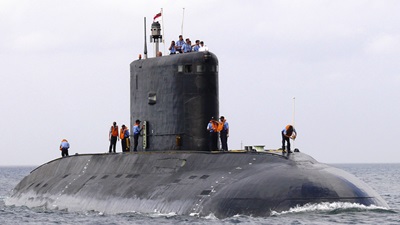
To support its growing submarine fleet, India has constructed two submarine bases. The first is at Karwar, south of Mumbai, while the second is a secret base called INS Varsha on the east coast near Kakinada. INS Varsha is part of a larger project to enhance India’s naval nuclear capabilities in response to China’s recent upgrades and will feature underground pens for the submarines.
This expansion of India’s nuclear submarine capabilities represents a significant advancement in its naval power and strategic deterrence, positioning the country as a major player in the Indo-Pacific region’s maritime security landscape.
Last updated: December 26th, 2025

