
On November 3 and 4th, 2016, the federal government and that of the various Indian states discussed the rate structure for the Goods and Services Act, popularly known as GST, and signed off on a multi-tiered tax system. Addressing a press conference, India’s finance minister Arun Jaitley said that the aim was to minimize the inflationary impact on the common man while protecting revenues.
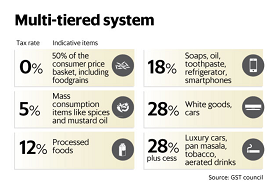
On goods such as aerated drinks, luxury cars, tobacco and pan masala, a surcharge will be levied by the federal government over and above the 28% slab. This amount will be used to compensate states for losses arising from GST, estimated at $8 billion in the first year.
A technical committee formed by federal and state government officials will finalize the allocation of items into different rate categories. The tax rate on gold will be decided after this allocation of items.
The states and the federal government are also working on a similar tax structure for services, with most services being taxed at 18% and a few essential services at 12% and 5%, reports Mint.
The 4 draft legislations, namely the CGST, SGST, IGST and compensation laws are expected to be prepared by 15th of the month, with November 20 fixed as the date for reaching political consensus. The next Council meeting has been scheduled for November 24-25, for approving of the draft GST legislation.
Last updated: December 26th, 2025

