
India’s Defense Acquisition Council (DAC), led by Defense Minister Rajnath Singh, recently approved a procurement package totaling approximately $8.7 billion. A significant portion of this investment focuses on acquiring and co-producing advanced weaponry from Israeli defense firms, including Rafael Advanced Defense Systems and Israel Aerospace Industries (IAI). This move follows a Memorandum of Understanding signed in November to deepen security cooperation between the two nations.
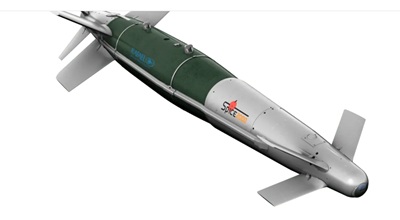
Key to this deal is the SPICE 1000 guidance kit. This autonomous air-to-ground system is designed for high precision, achieving a hit accuracy of less than 10 feet. The system weighs approximately 1,102 pounds and has an operational range of up to 62 miles. Its primary advantage is its ability to function independently of GPS; it utilizes an electro-optical homing head and mathematical algorithms to compare real-time imagery with pre-loaded target data.
The procurement also addresses gaps in India’s long-range strike capabilities highlighted during recent regional tensions. While India currently utilizes the Rampage missile—which has a range of 93 to 155 miles—its deployment can expose fighter jets to advanced air defense systems. To mitigate this, India is seeking the Air LORA ballistic missile. Weighing roughly 3,527 pounds, the Air LORA offers a range of 248 miles, allowing pilots to strike military bases and missile sites from a safer distance. It operates at supersonic speeds and features “launch and forget” technology with jam-protected satellite navigation.
Furthermore, India is pursuing the Ice Breaker cruise missile. This system is effective up to 186 miles against land and sea targets. It is designed to operate in all weather conditions and environments saturated with electronic warfare, using infrared sensors and AI for target identification.
Data from the Stockholm International Peace Research Institute (SIPRI) confirms that India remains Israel’s largest defense customer, receiving 34% of Israeli defense exports between 2020 and 2024. Beyond direct purchases, current negotiations suggest a shift toward domestic manufacturing of these systems, including the Air LORA and Ice Breaker missiles, to further integrate these technologies into the Indian Air Force’s Sukhoi 30 and MiG 29 fleets

