
In 2020, Japanese seasoning giant Kikkoman officially entered India — a market long considered a “blue ocean” by global food brands thanks to its vast population and diverse culinary traditions. India’s seasoning industry is growing at a compound annual rate of 7.3%, but soy sauce has historically had little presence in local cooking. Breaking into this “demand-free” market required creativity and cultural sensitivity.
Finding the Entry Point: Indian Chinese Cuisine
Kikkoman’s breakthrough came through “Indian Chinese cuisine”, a fusion style popular across cities and villages of the country. Characterized by garlic, ginger, and chili, these dishes proved an ideal canvas for soy sauce. By showing chefs how soy sauce could elevate fried rice, noodles, and stir-fries, Kikkoman tapped into a growing food trend with mass appeal.
B2B First: Winning Over Chefs
Rather than targeting households directly, Kikkoman adopted a B2B strategy. The company built relationships with restaurant chefs and roadside vendors, demonstrating soy sauce’s versatility. This grassroots approach quickly expanded Kikkoman’s footprint to more than 30 cities in under 29 months. Partnerships with chains such as Beijing Bites further boosted brand recognition.
Local Expertise: Harry’s Role
A key figure in this success was Harry Jr. Long , a cultural bridge with 14 years of experience in India. His insights into local food habits helped Kikkoman tailor its strategy, blending Japanese culinary elements with Indian tastes. His chef-focused outreach proved soy sauce’s value in Indian Chinese cuisine and accelerated adoption.
Product Innovation: Dark Soy Sauce
In February 2024, Kikkoman introduced Dark Soy Sauce, designed specifically for Indian Chinese dishes. With a deeper color from natural fermentation (not artificial additives), it catered to Indian consumers’ preference for richly colored foods. This innovation strengthened ties with restaurants and reinforced Kikkoman’s reputation for healthy, high-quality products.
Looking Ahead: From Kitchens to Homes
As India’s economy grows, more families are cooking Indian Chinese meals at home. Kikkoman plans to expand into the B2C market with retail packaging, complementing its successful B2B foundation. By combining chef-driven promotion with consumer-facing products, the company aims for comprehensive market coverage.
Kikkoman’s journey in India is a textbook case of localized innovation. By identifying Indian Chinese cuisine as a gateway, leveraging a B2B model, and launching tailored products like Dark Soy Sauce, the brand transformed a challenging market into a growth engine. The lesson: in culturally nuanced markets, success depends on understanding local needs and adapting global products accordingly.
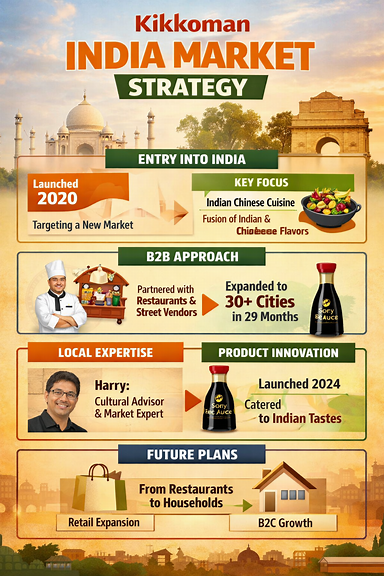
Kikkoman’s journey in India exemplifies how global brands can thrive through cultural adaptation, local partnerships, and product innovation — transforming a “demand-free” market into a growth frontier.

