
The Nicobar Islands are an archipelagic island chain in the eastern Indian Ocean. They are located in Southeast Asia, at approximately 90 miles northwest of Aceh in Sumatra, and separated from Thailand to the east by the Andaman Sea. The island is close to international tourist destinations such as Senang City, Phuket Island, and Langkawi Island. They are part of India.
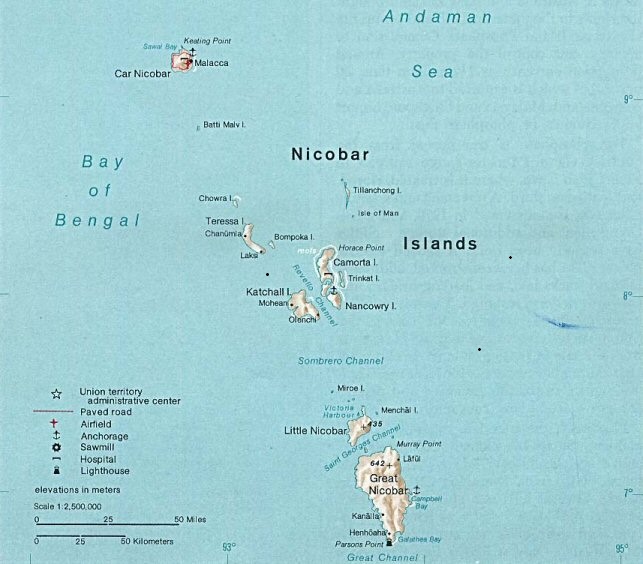
India’s $8.7 billion Great Nicobar Project is aimed at countering China’s maritime dominance and recapturing lost trade revenue. It also aims to transform the Great Nicobar Island into a strategic maritime hub with an International transshipment port, an airport, a power plant, and a new township near global shipping lanes, boosting trade, reducing reliance on foreign ports, and strengthening India’s security.
Strategic and Economic Significance
Located in the eastern Indian Ocean — just 40 nautical miles from major East-West shipping routes — Great Nicobar Island is being transformed into a major economic and defense powerhouse. India currently lacks deep-water ports for massive container ships, forcing heavy reliance on foreign hubs in Singapore and Colombo, which results in significant revenue losses. To capture this traffic and secure its supply lines, India is developing the Galathea Bay transshipment port.
Core Infrastructure
- International Container Transshipment Terminal (ICTT): Capable of handling 14.2 million twenty-foot equivalent units (TEUs) to rival regional transshipment hubs.
- Greenfield International Airport: Built for both civilian and military use to reduce response times in Southeast Asia.
- Hybrid Energy Plant: A 450MVA gas and solar power installation to make the region self-sufficient.
- Modern Township: A new urban center built to support commercial, residential, and operational needs.
- Environmental and Social Considerations
The project aims to balance economic growth with environmental and native protections. The development is zoned to preserve green zones and incorporates strict environmental safeguards. Planners state that no tribal communities will be relocated, as also that development will abide by established guidelines to protect vulnerable groups. However, the scope of the project has drawn push back from environmentalists and opposition politicians who cite concerns over the deforestation of tropical rainforests and potential threats to local wildlife and endangered turtle nesting sites

