
India’s Tata Group has announced plans to establish India’s first privately-owned nuclear power plant in Rewa, Madhya Pradesh. The project, valued at $3.4 billion represents a significant policy shift in India’s nuclear energy sector, which has historically been managed exclusively by government entities such as the Nuclear Power Corporation of India Limited.
This development opens the door for private sector participation in civil nuclear power generation, a move long restricted due to safety and regulatory concerns. The Rewa plant is expected to encourage further private investment in nuclear energy. India is aiming to significantly expand its nuclear capacity as part of its clean energy roadmap.
The project will be led by Tata Power, one of India’s largest integrated power companies. It aligns with Tata’s broader clean energy strategy, which already includes solar, wind, and hydro power. Nuclear energy, as a low-carbon and reliable base-load source, supports India’s long-term sustainability and climate goals.
India’s growing energy demand and commitments to reduce carbon emissions have renewed interest in nuclear power. Advantages include lower emissions compared to fossil fuels, consistent supply unlike solar and wind, and reduced reliance on coal.
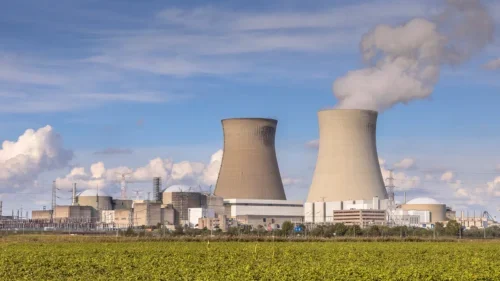
The government has introduced frameworks to allow private participation while maintaining strict oversight of operations and safety. Private companies are expected to contribute through investment, infrastructure development, and technology partnerships, potentially accelerating nuclear expansion.
The Rewa project is anticipated to generate employment, improve local infrastructure, and boost regional industries. Rewa, already known for its large solar projects, could become a major energy hub with the addition of nuclear power.
Challenges remain, including high capital costs, long construction timelines, regulatory compliance, and public acceptance. Successful execution will be critical to the project’s impact.
If completed as planned, the Tata Group’s initiative could mark a turning point in India’s energy landscape, shifting nuclear power from a government-only domain to a public-private model.

