
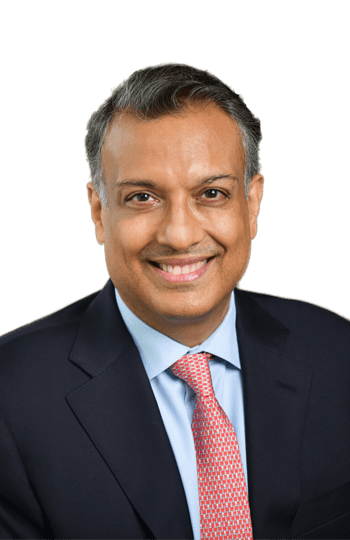
Sumant Sinha, founder, chairman, and CEO of India’s largest renewable energy company ReNew Power, (Nasdaq: RNW) spoke during a United Nations Climate Action panel in New York, ahead of COP27.
In his speech, Sinha said:
“In India, there is a strong political consensus around the government’s ambitious climate targets and actions. India is the world’s third-largest renewable energy producer and the third-biggest emitter of greenhouse gases. In recent years, the country has driven substantial expansion in capacity across wind and solar power.
“India’s next move is in *green hydrogen. The first phase of a planned push into this new energy source that was launched by the government in February set a target of five million tons per year of green hydrogen production by 2030. This goal is supported by subsidies and incentives for renewable energy project.
“Key risks to global climate action remain, including backsliding on commitments, reduced flows of capital to developing nations for climate action, disrupted supply chains, and food and energy crises in the developing world.
“Given this difficult backdrop, the U.S. (the world’s largest economy) and India (the fastest growing major economy) must take the lead in addressing these challenges.
“We must work together, through UNFCCC COP 27 and India’s Presidency of the G-20, to ensure that strong momentum on climate action continues globally, despite the energy crisis. We must ensure that commitments on both net zero and climate finance are not scaled down.
“Along with others, New Delhi and Washington must launch joint initiatives to lower borrowing costs for clean energy projects in developing countries. The aim is to eliminate the likelihood of reduced private flows of climate finance, due to surging interest rates in developed countries and depreciating currencies of developing nations.
“We must also enhance collaboration between companies in the U.S. and India to improve effectiveness and ensure existing business-led initiatives actually deliver. By amplifying voices from more geographies, we can shape potential solutions–together.
“Listen to the Global South. In many cases, the world’s poorest and most debt-laden nations are also the most vulnerable to climate shocks. Their needs must be a priority–and their ideas and experiences will help build new solutions.
Last updated: December 26th, 2025

