
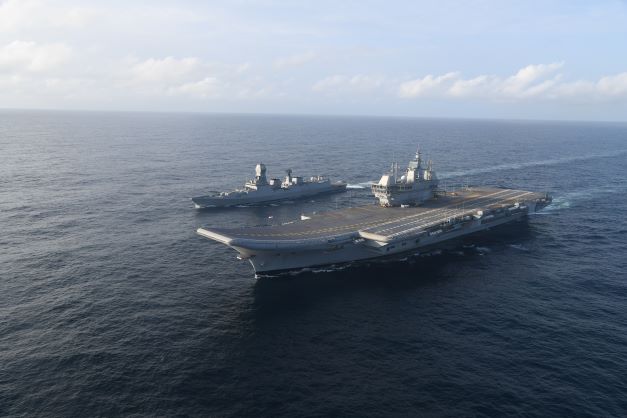
On September 2, Prime Minister Narendra Modi commissioned INS Vikrant, India’s first indigenously-built aircraft carrier, in a ceremony at the Cochin Shipyard in the southern state of Kerala.
13 years in the making at a cost of $2.5 billion, the vessel – 860 ft long and almost 197 ft tall – is the first aircraft carrier India has designed and built on its own. It has the capacity to hold 30 fighter planes, including MiG-29K fighter jets and helicopters. The warship can accommodate a crew of nearly 1,700. The four engines on the massive ship are made by GE. These LM2500 gas turbine kits were manufactured at GE’s Evendale, Ohio, facility and assembled and tested by HAL’s Industrial & Marine Gas Turbine Division in Bangalore, India.
Vikrant (which means courageous) will sail across both Indian and international waters, accompanied by a fleet of frigates, destroyers and submarines to protect it. This is the second aircraft carrier named INS Vikrant – the first one was purchased from the United Kingdom back in 1961.
With 76% of the new ship’s parts sourced from over 500 Indian firms – both the navy and the Cochin Shipyard say the Vikrant‘s cost is an investment in boosting India’s defense production capabilities. The shipyard is now investing in a new dock – to be ready by 2024 – to build India’s next aircraft carrier.
On the occasion, the Prime Minister also unveiled the new naval ensign. The new ensign has the national flag on the upper canton. A blue octagonal shape with the national emblem sits atop an anchor, to depict steadfastness, and it is superimposed on a shield with the navy’s motto “Sam No Varuna” (a Vedic mantra invoking the god of seas to be auspicious) in the Devanagari script.
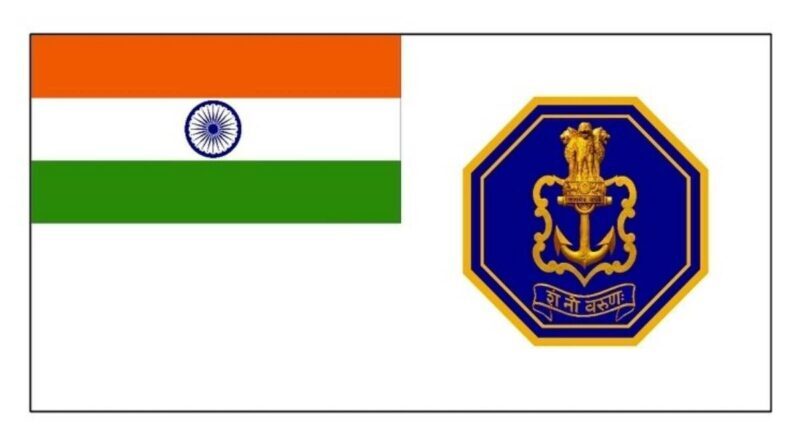
The octagon represents the eight directions and has been included as a symbol of the Navy’s “multi-directional reach and multi-dimensional operational capability.” The golden borders of the octagon have been inspired by the seal of Maratha Emperor Chhatrapati Shivaji Maharaj (reign 1674-80) who built a credible naval fleet that earned grudging admiration from European navies operating in the region at the time.
Last updated: December 26th, 2025

