
Shortly after gaining independence from the United Kingdom, India retained Swiss-French architect LeCorbusier to design an entire city, Chandigarh in Punjab. Today, an even more ambitious project is taking shape on the banks of the Krishna River in the state of Andhra Pradesh. If you have not heard about Andhra, this is the state where Google has committed over $15 billion for an AI Data Center. On a recent visit to a nearby state, I was told that Andhra would buy a million dollar piece of equipment for its labs to support a single major foreign customer.
Most American companies tracking India’s growth story know the usual map: Bangalore for software and aerospace, Mumbai for finance and entertainment, Hyderabad for pharmaceuticals and the back office that became a front office.
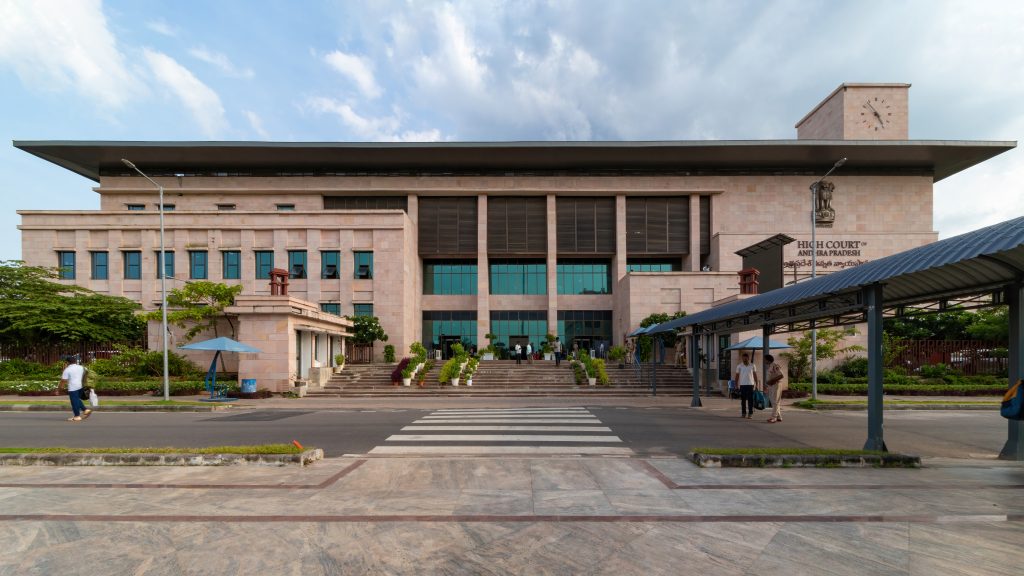
A new name is worth adding to that list: Amaravati, a capital city being built from bare farmland in the south.
The scale of the thing
Andhra Pradesh has roughly 50 million residents and, since 2014, no real capital of its own. That year the state was split in two, and Hyderabad — the tech hub the state had spent decades cultivating — went to the newly created Telangana. What remained was heavily indebted and administratively homeless.
The replacement is being built on former banana groves and vegetable plots on 35,000 acres assembled from some 30,000 farmers through a land-pooling arrangement rather than outright purchase. Farmers received modest annuity payments while waiting for smaller parcels of serviced, developed land. The master plan comes from Lord Norman Foster’s firm, Thames Bank, with early planning input from Singapore’s government. Roughly 25,000 workers are on site daily.
The design is unapologetically showpiece: a gridded layout, a five-mile government corridor, a spired legislative assembly ringed by a freshwater lake, five administrative towers housing 16,000 civil servants, a helipad atop the tallest. Planners are targeting 60 percent water and green cover and close to 2,000 miles of bike lanes. This is the most ambitious urban planning exercise ever attempted in India, according to today’s New York Times.
The commercial hook: Quantum Valley
The piece most relevant to foreign business is a 50-acre campus branded Quantum Valley, backed by hundreds of millions of dollars. Its anchor building, engineered with seismic isolation to damp even minor vibration, is slated to house a 156-qubit IBM quantum computer as soon as January 2027. Eight additional towers, with capacity for 88,000 engineers, are planned by the end of 2029, alongside a stated goal of training 5,000 quantum specialists in the region by 2030.
The strategic logic, pitched to the state by the director of Indian Institute of Technology, Madras, is that classical computing will eventually run short for finance, agriculture and pharmaceutical workloads, and that early entry beats late catch-up. The state is candid that commercial returns are years away. It is equally candid that it wants what Hyderabad got from software — an identity that pulls capital in — while correcting what it sees as that era’s mistake: mastering code but never the hardware or the supply chain underneath it.
The political clock
The driving figure is Chief Minister N. Chandrababu Naidu, 76, who built Hyderabad’s tech economy in the late 1990s and courted Microsoft there. His record also includes a five-year gap out of power beginning in 2019, during which Amaravati construction simply stopped and his successor floated rival capital plans. He returned to office in 2024, and now holds meaningful leverage within Prime Minister Modi’s national coalition — leverage he has converted into legislation confirming Amaravati’s status and into billions in development loans.
Amritt Take: Why It Matters
Procurement. A greenfield city of this scale is a decade-long buying pipeline — water and wastewater systems, grid and substation equipment, building management systems, transit, engineering and design services. It also matters that the financing runs partly through development loans, which typically carry open-tender requirements rather than local-preference rules.
The quantum stack, not the quantum computer. IBM’s 156-qubit system is the headline, but a state government committing hundreds of millions creates demand for everything around it: cryogenics, control electronics, shielding, error-correction software, systems integration. If you sell into that layer, a well-funded buyer that has publicly staked its identity on the technology is a real customer. The machine itself is less interesting — IBM sells cloud access to larger systems already, so this is more prestige asset than competitive edge.
Talent probably the biggest one. The Hyderabad lesson for American firms wasn’t real estate; it was that Microsoft and others got a deep engineering labor pool at a favorable cost structure for twenty years. If the region actually produces 5,000 quantum-literate engineers by 2030, that’s a hiring pool. It’s also the channel that pays off even if the city underdelivers, since the universities and the graduates are portable.
Political positioning. Indian state-level investment incentives are negotiated company by company. Firms that show up early tend to get better terms than firms that arrive once a place is proven. Are you ready for a leap. Talk to me.

