
Uber, headquartered in San Francisco, California, has invested $10 million in Carrum Mobility, a fleet management startup based in Gurgaon, Haryana in the Delhi National Capital Region. The Series B round values Carrum at $168 million, nearly tripling the roughly $63 million valuation the company carried after Uber’s first $7 million investment in January.
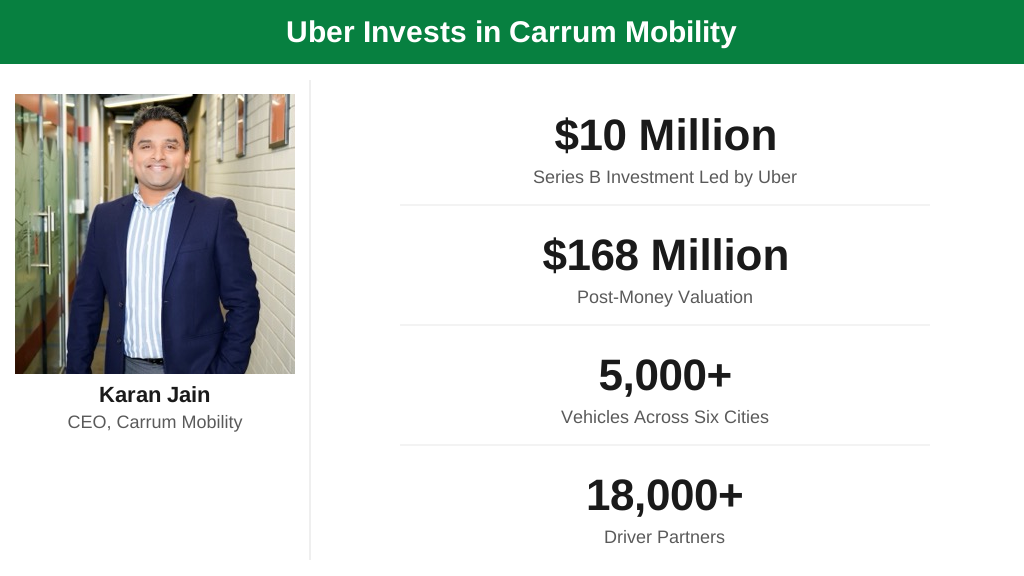
Carrum operates more than 5,000 vehicles across Bengaluru, Hyderabad, Mumbai, Pune, Delhi and Kolkata, with a Chennai launch expected this month. Founded in 2024 by Karan Jain, a former McKinsey consultant who previously built the self-drive rental startup Revv, which CarDekho Group acquired, the company runs a business-to-business fleet platform focused on compressed natural gas and electric vehicles. About 70 percent of its cars are hatchbacks used for Uber Go, 10 percent are sedans on the Premier tier and about 20 percent are sport utility vehicles serving Uber Black. That makes Carrum Uber’s largest premium fleet partner in India.
The growth since January has been sharp. Carrum recorded revenue of about 233 crore rupees, or about $24 million at current exchange rates, in the fiscal year ending March 2026, up from about 62 crore rupees the previous year. The company now manages more than 18,000 driver partners. Jain told Inc42 the company has “nearly doubled scale since last round while remaining consistently profitable.”
When I travel to India, I often use Uber, whose main competition there is an Indian company called Ola. I have not seen Lyft in India so far.
This marks Uber’s second investment in Carrum this year and fits a broader pattern. Uber also backed Everest Fleet with $20 million in November 2025 and $30 million in September 2024. Carrum plans to use the capital to more than double its fleet to about 11,000 vehicles over the next twelve months and expand into additional cities.
Why This Matters
Uber’s repeat investments signal a deliberate asset-partnership strategy for India. For American executives evaluating the market, this model offers a template: scale through local partners while keeping direct capital exposure manageable. The bigger lesson is that for full success in India, you must adapt to Indian conditions. Amazon has done this. So has L’Oreal. McDonalds pioneered vegetarian kitchens in India. If your company success in India is muted so far or if you are considering entering the market, talk to me

