
Mercedes-Benz Group, based in Stuttgart, Germany, sees India as a future base for exports, with parts being sourced from India soon (before finished cars). Ola Källenius, the company’s chairman, said a larger manufacturing role for India is “a question of when, as opposed to a question of if,” Business Standard reported. He added that the company has not made that decision.
In the past Ford Motor company exported entire cars to the U.S., Europe and South America. Hyundai and Kia also export from India.
Källenius spoke at a media roundtable at the company’s plant in Chakan, near Pune, in western India. The plant builds cars mainly for buyers in India. Parts come first, he said: “We can, if you will, export out of India on a component basis before you ask a question on a full vehicle.”
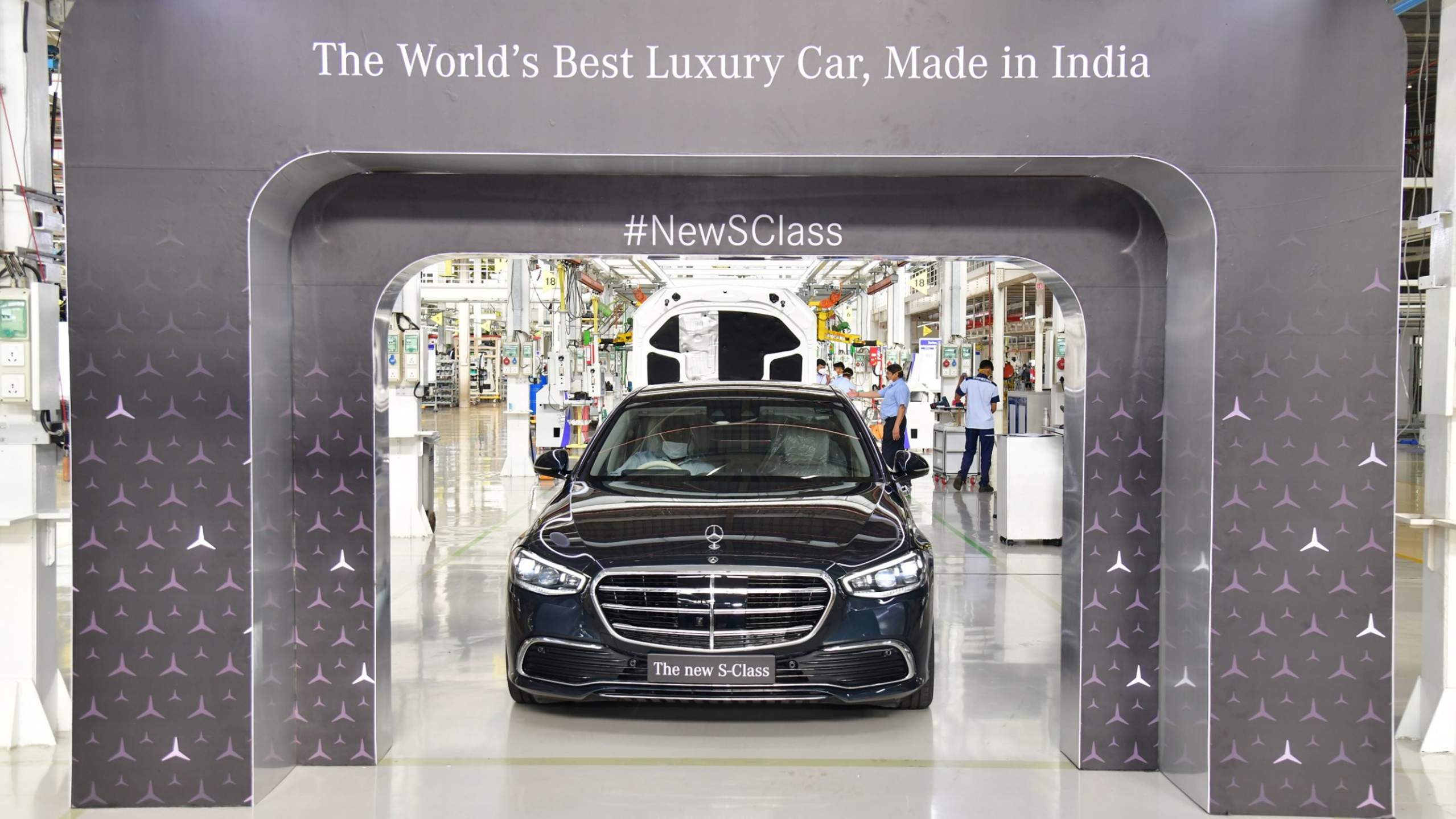
Mercedes-Benz India has invested $338 million since it began operating, the company said. That includes $21 million in 2026 for manufacturing, new products and digital systems. Santosh Iyer, managing director and CEO of Mercedes-Benz India, called the country a strategic market for the company.
Sales support the case. Mercedes-Benz sold a record 15,190 vehicles in India in the first nine months of 2026, up 8%. The third quarter was its best ever in the country, at 5,422 vehicles, up 6%. Luxury cars remain a small part of the market, just over 1% of passenger vehicle sales, or approximately 60,000 vehicles a year. Källenius expects demand to grow significantly as the economy expands over the next five to seven years.
The Economic Times reported that Mercedes-Benz plans to deepen local manufacturing and widen its supplier base in India, where vendors already supply engines and axles. “It’s more likely than not that we will use India as a source also for a supply base outside of India,” Källenius said. Mercedes-Benz Research and Development India, the company’s engineering center in the country, will also gain weight in its global network, he said.
Devendra Fadnavis, chief minister of Maharashtra, urged the company to “Invest not just for India, but for the entire world.” He invited Mercedes-Benz to develop battery technology, automotive artificial intelligence, electronics and software in the state.
Källenius said India’s rise does not come at China’s expense. “It’s not an either-or. It’s an and,” he said. He expects India’s position in the company’s global hierarchy to rise over the next five years.
The company also rolled out the locally built electric GLC at Chakan, priced at $83,000 ex-showroom. Källenius expects electric vehicles to reach a share in the 20% range of its sales in India in 2027, up from a high single-digit share this year.
Why this matters: Mercedes-Benz is building its role in India in stages, starting with sourcing and engineering and leaving vehicle exports as a later decision. A proposed free trade agreement between India and the European Union could speed that up. “If you have less friction, the likelihood of an export transaction is higher,” Källenius said.

