
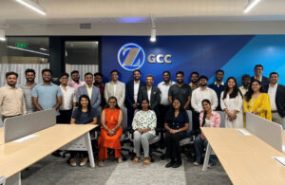
Zimmer Biomet, the Warsaw, Indiana-based orthopedic medical device company, has opened a new “technology center” in Bangalore and plans to hire approximately 500 employees there over the next three years.
This new Global Capability Center will support a broad range of activities, including software engineering, product design, research and development, quality, regulatory affairs, and finance. About two-thirds of the planned employees are expected to work in technology-related positions. The company intends to use the Bangalore center for technology and product-related work that supports its global medical device business.
Artificial intelligence will be an important area of focus. The company expects teams in Bangalore to work on applications of AI in areas including surgical robotics, surgical planning, and research and development, with the goal of incorporating the technology into products and accelerating development.
Zimmer Biomet manufactures orthopedic implants for knee, hip, and shoulder replacement as well as robotic and other surgical technologies used in treating musculoskeletal conditions. The United States remains one of its largest markets, along with Europe and Japan.
The Bangalore center is intended to bring several disciplines together in one location. Shaun Braun, Zimmer Biomet’s Chief Information and Technology Officer, said the company wants the center to have the functions needed to work collaboratively on innovation that can ultimately be used by surgeons and care teams.
Zimmer Biomet has initially outlined plans for about 500 employees over three years, but management does not appear to view that number as a fixed ceiling. Jehanzeb Noor, the company’s Chief Strategy, Business Development, Innovation and Transformation Officer, said the company is not constrained to 500 employees and indicated that the operation could become considerably larger over time.
The investment is another example of medical device companies expanding the role of their Global Capability Centers in India.
Earlier generations of India centers were frequently established around IT support, finance, and other shared services. Increasingly, medical technology companies are putting software development, engineering, R&D, regulatory, quality, data, and product-development capabilities in the country.
India is a major beneficiary of that transition because of its large pool of software engineers and other technical professionals. For medical device manufacturers, those skills have become increasingly relevant as products incorporate more software, data analytics, artificial intelligence, robotics, and digital technologies.
Zimmer Biomet’s choice of functions also shows how closely technology and medical device development are becoming intertwined. A company traditionally associated with orthopedic implants now also competes through robotic surgery, software, data, and technologies that assist surgeons in planning and performing procedures.
The new Bangalore center gives Zimmer Biomet another location from which to develop those capabilities for its global business. I predict that total employment in India will grow substanitally beyond the initial 500 positions, and India will assume an increasingly significant role within the company’s global technology and product-development organization.
For American medical device companies, Zimmer Biomet’s expansion is part of a broader shift in how India is being used. The country remains an important healthcare market, but for companies such as Zimmer Biomet, it is also becoming a location where engineers and other specialists help develop the technologies sold to hospitals and surgeons around the world.

