
The European Union and India are moving quickly toward implementing what would be the largest trade agreement either side has ever concluded.
Negotiations on the EU-India Free Trade Agreement were completed in January 2026, and in September the European Commission formally submitted the agreement to the Council of the European Union for signature and conclusion. The next steps include approval by EU member states, consent from the European Parliament and completion of India’s own domestic procedures.
For European companies, the potential commercial impact is substantial. The agreement would eliminate or reduce tariffs on 96.6% of EU goods exports to India. The European Commission estimates that the agreement could eventually double EU goods exports to India.The deal covers more than tariffs. It also seeks to simplify customs procedures, reduce non-tariff barriers, improve intellectual-property protections and create more predictable rules for services and investment.
Industries expected to benefit include machinery, chemicals, pharmaceuticals, medical devices, aviation and automotive products. For example, tariffs on many machinery and electrical products are scheduled to fall to zero, while most medical and surgical equipment will also receive substantial tariff relief over time. (ec.europa.eu)
Why the Timing Matters
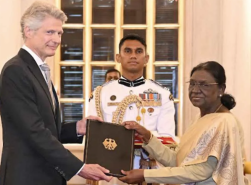
Germany’s new Ambassador to India, Jasper Wieck, recently described the agreement as increasingly a matter of economic necessity rather than simply a policy choice. In the photo below, he is seen presenting his credentials to Indian President Droupadi Murmu in August 2026
In an interview with NDTV, Wieck argued that in a more multipolar global economy, countries need not only strong domestic economies but also dependable international partners. He expects the agreement to be signed before the end of 2026 and potentially take effect in 2027, subject to completion of the required approval processes.
That broader strategic logic is important. The EU and India already trade more than €180 billion in goods and services annually, and the combined markets represent nearly two billion people and roughly one-quarter of global GDP.
Germany Sees Broader Opportunities
Germany is also looking beyond trade.
Wieck highlighted deeper cooperation in defense manufacturing, technology transfer and investment. Germany and India have been expanding military exercises, maritime cooperation and defense-industry ties, including opportunities for joint production in India.
He also pointed to the rapid growth in Indian students studying in Germany and continued work on migration and professional mobility.
For businesses, the broader message is that the EU-India relationship is moving from a largely commercial dialogue toward a more integrated economic and strategic partnership.
The trade agreement still must clear several procedural hurdles before companies can take advantage of its provisions. But with negotiations completed and the agreement now before EU member states, the discussion has shifted from whether an EU-India trade deal will happen to how companies should prepare for it.

