
Novartis India has agreed to acquire the Indian trademarks and related intellectual property for Pfizer’s Minipress brand for ₹12.5 billion, or approximately $140 million, in a substantial addition to its portfolio of established medicines. Despite the Novartis name, the transaction is no longer an acquisition by Swiss pharmaceutical company Novartis AG. Private equity firm ChrysCapital, based in New Delhi, agreed in December 2025 to acquire Novartis AG’s 70.68% controlling interest in the publicly traded Indian company. The business is now under new ownership and management and is expected eventually to adopt a new name.
That distinction makes the Pfizer transaction particularly interesting. It provides an early indication of how the new owners intend to develop the former Novartis India business.
Minipress XL contains prazosin and is used in India primarily for treating hypertension, or high blood pressure, as well as urinary symptoms associated with benign prostatic hyperplasia, an enlarged prostate. The acquisition covers the Minipress and Minipres trademarks in India along with related intellectual property rights. It coincides with Pfizer’s decision to withdraw Minipress XL from the Indian market under its own ownership.
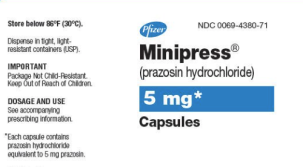
Pfizer India said it would stop marketing, distributing and selling Minipress XL beginning September 7, 2026, following a decision by Pfizer in the United States to discontinue manufacturing the product.
For Pfizer, therefore, the transaction provides a way to transfer the value of an established Indian pharmaceutical brand as the company exits the product. For Novartis India and its new owners, it provides an established medicine with substantial existing sales rather than requiring them to build a new brand from the ground up.
According to IQVIA data cited by Novartis India, Minipress XL approximately $25 million in Indian sales during the 12 months ending July 2026.
The brand’s sales grew at a compound annual rate of 6.3% over the previous four years. That is respectable growth, although it trails the approximately 9% annual growth reported for the broader therapeutic category during the same period. The ₹12.5 billion purchase price is therefore significant relative to the brand’s current sales. It amounts to roughly 5.5 times Minipress XL’s most recent annual revenue, although a simple price-to-sales calculation does not account for profitability, expected future growth or other rights and economics associated with the transaction.
The deal also needs to be viewed in the context of the unusual transformation underway at Novartis India.
The Indian company retains a portfolio of established pharmaceutical brands across therapeutic areas including pain management, women’s health, neurosciences, calcium supplementation and transplant immunology. Its existing brands include Voveran, Calcium Sandoz and Tegrital. The company itself is relatively lean, with a team of approximately 40 employees, and relies on outside relationships for functions including contract manufacturing. Adding an established Pfizer brand therefore represents a potentially important expansion of the portfolio without requiring the company to develop a medicine internally.
Why This Matters
For American and European pharmaceutical companies, the transaction also illustrates the continuing value of mature drug brands in India.
A multinational pharmaceutical company may decide that an older medicine no longer fits its global manufacturing or portfolio priorities. That does not necessarily mean the product has lost its commercial value in India, where established physician relationships, brand recognition and a large patient population can support a product for many years.
Pfizer’s exit from Minipress and its acquisition by the former Novartis India business is an example of that dynamic. One multinational company is discontinuing the product, while a private-equity-controlled Indian pharmaceutical business is paying a substantial amount to keep the brand in its portfolio.
The transaction may also provide an early indication of ChrysCapital’s strategy for the business: use the existing Novartis India platform and established distribution relationships as a base, then add mature pharmaceutical brands through selective acquisitions.
If further transactions follow, the company that eventually emerges from the former Novartis India could look quite different from the relatively small listed subsidiary that Novartis AG decided to sell.

