
Blackstone says its investments in India have become its best performing anywhere in the world, and that the country is nearing what its president calls a “tipping point” for foreign capital.
Jon Gray, president and chief operating officer of Blackstone, described the shift in an interview with Bloomberg Television’s Wall Street Week, carried by Mint. Blackstone’s first push into India, he said, started slowly and lost momentum during the global financial crisis. “We had sort of a skeleton crew. We didn’t really have a great defined strategy,” Gray said. “We couldn’t make the numbers work. So we did basically nothing.”
That early setback pushed Blackstone to rethink its approach. “We said, ‘You know what? We just need a better approach,'” Gray said. The firm shifted to majority or equal-control stakes, concentrated in information technology services, commercial real estate and domestic manufacturing. India is now the source of Blackstone’s highest private equity returns anywhere in the world, according to Gray.
“It takes time to get to a stage where you can really begin to expand your growth rate,” Gray said. “And I do feel like India is getting closer and closer to that tipping point.”
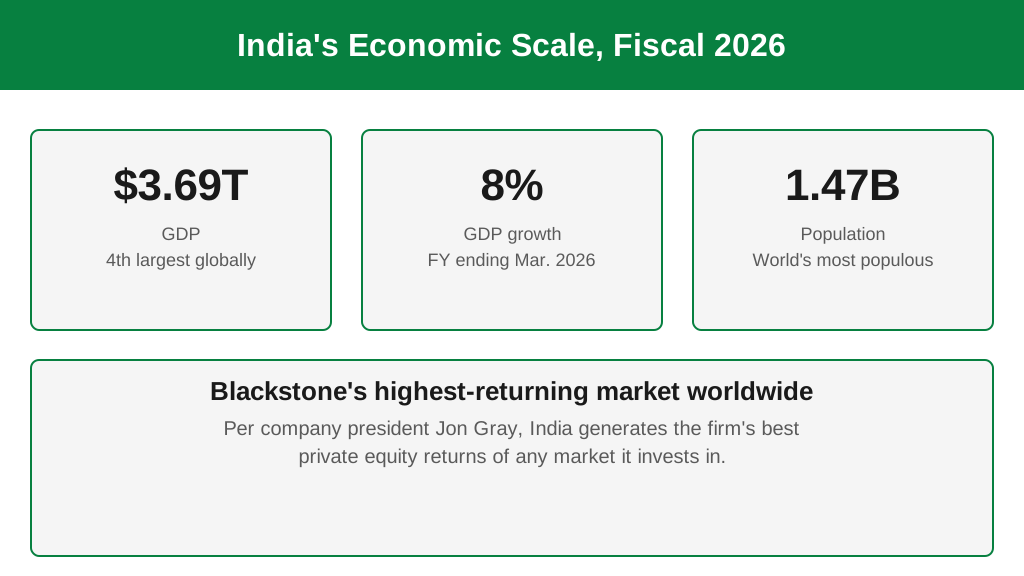
The scale behind that confidence is real. Ranked fourteenth in the world in a 2005 World Bank report, the country’s gross domestic product has grown almost fivefold since, to $3.69 trillion, moving into fourth place globally, ahead of the United Kingdom and France.
Gray acknowledged friction points remain between the United States and India, including tariffs and higher energy costs tied to the war between the United States and Iran. “There will be bumps,” he said. Even so, he said the relationship has consistently trended toward closer ties as the country deepens its engagement with capitalism, regardless of which U.S. political party holds power.
Patience, Gray said, has mattered as much as capital. “The real issue that has held India back for a long time was the infrastructure in the country. And it wasn’t just the physical infrastructure. It was the legal, the capital markets infrastructure,” he said. He credited Prime Minister Narendra Modi‘s administration with a “phenomenal job” turning that around, adding: “A lot of things are falling into place.”
For American executives weighing whether India is ready for a larger commitment, Blackstone’s answer, years after its own uncertain start, is that the wait is nearly over.

