
Alcon is expanding its involvement in India through a new global training center for vitreoretinal surgery developed with Aravind Eye Care System, one of the world’s largest providers of eye care.
The Aravind Alcon Global Centre of Excellence for Vitreoretinal Surgery Training has opened in Coimbatore, in the southern Indian state of Tamil Nadu. It is the second specialized training center created through the partnership, following the establishment of a cataract training center in 2024.
For Alcon, the new facility represents another dimension of its engagement with India. In addition to selling ophthalmic equipment and products in the country and operating Global Capability Center facilities in Bangalore, the company is working with an Indian healthcare organization to train ophthalmologists from India and other parts of the world.
The new center focuses on diseases involving the retina and vitreous, the gel-like substance filling the eye. Vitreoretinal surgery is a specialized area of ophthalmology requiring considerable additional training, and access to experienced retinal surgeons remains limited in many developing healthcare systems.
Alcon and Aravind plan to use the Coimbatore center as an international training hub, with particular relevance to ophthalmologists from Africa, Latin America and parts of Asia. The facility includes a wet laboratory where physicians can develop surgical skills in a controlled environment before applying them clinically.
Approximately 60 participants are expected to receive hands-on training each year initially. The program will also use virtual fellowships and other remote education to reach considerably more physicians outside Coimbatore.
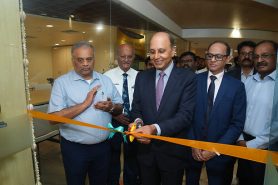
Alcon and Aravind have worked together on surgical education for more than two decades. Raj Narayanan, Alcon’s Senior Vice President and President International, said the new retina center extends that relationship into an area where shortages of trained specialists continue to limit access to care.
Aravind Brings Unusual Scale to the Partnership
For American readers unfamiliar with Aravind, the size of the organization helps explain why it is a significant partner for Alcon. Aravind Eye Care System was founded in Madurai in 1976 by ophthalmologist Dr. Govindappa Venkataswamy with a mission of reducing avoidable blindness. From a relatively small eye hospital, it has developed into a network combining hospitals, community outreach, physician training and high-volume eye surgery.
Today, Aravind performs more than 720,000 eye surgeries and procedures annually and says it has handled more than 90 million outpatient visits and 10.8 million surgeries since its founding. About half of its patients receive treatment either free or at substantially subsidized rates. Its operating model uses high patient volumes and standardized processes to help subsidize care for patients who cannot afford to pay while remaining financially self-sustaining.
Aravind has become particularly well known internationally for applying high-volume operating methods to cataract surgery. Its model has been studied by healthcare organizations and business schools because it combines very large patient volumes with an approach designed to maintain quality while keeping costs relatively low.
That clinical volume also creates an unusual environment for medical education. Physicians training at Aravind can encounter a large number and variety of cases, while the organization has decades of experience teaching ophthalmologists and transferring its practices to eye-care programs elsewhere.
The new retina center builds on those capabilities but addresses a more specialized part of ophthalmology. Cataract surgery has become widely available in many countries, while advanced retinal treatment remains concentrated among a much smaller number of appropriately trained specialists.
For Alcon, the partnership therefore provides access to something that cannot easily be reproduced in a conventional corporate training facility: a large clinical institution with substantial surgical volume, experienced ophthalmologists and an established international training operation.
It also illustrates a broader role India can play for multinational medical device companies. India is not only a large market for ophthalmic technology or a source of engineering talent. In areas where Indian healthcare institutions have developed substantial clinical expertise and patient volumes, the country can also serve as a base for training healthcare professionals from other emerging markets.
Alcon’s expanding relationship with Aravind is an example of that model. The company’s technology and international reach are being combined with the scale and clinical experience of an Indian healthcare system to develop surgical capabilities that can ultimately be used well beyond India.

