
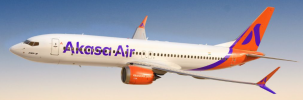
India’s youngest airline, Akasa Air, is reportedly considering another massive aircraft order, potentially exceeding 200 Boeing 737 MAX jets. If finalized, the deal could nearly double the airline’s existing aircraft commitments and underscore its determination to become a major player in India’s rapidly growing aviation market.
According to a September 2026 Bloomberg report, Akasa Air is in preliminary discussions with Boeing about the purchase. A decision could come in early 2027, with the agreement potentially finalized during the second half of that year. While negotiations remain at an early stage, the proposed order would secure aircraft deliveries extending beyond 2032, providing a foundation for the airline’s long-term expansion.
From Startup to Major Boeing Customer
Akasa Air, which commenced operations in August 2022, has already emerged as an important customer for Boeing. The airline announced its first order for 72 Boeing 737 MAX aircraft at the Dubai Airshow in November 2021. Valued at nearly $9 billion at published list prices, the order included 19 Boeing 737 MAX 8 aircraft and 53 higher-capacity MAX 200 variants.
Akasa received its first aircraft in June 2022, just weeks before launching commercial operations. The airline followed up with an order for four additional Boeing 737 MAX aircraft at the Paris Air Show in June 2023, all powered by CFM LEAP-1B engines
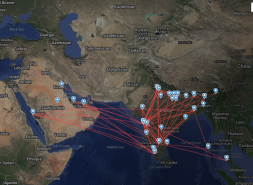
By September 2026, Akasa operated 43 Boeing 737 MAX aircraft, serving 29 domestic and seven international destinations, with another 183 aircraft awaiting delivery.
Challenging India’s Dominant Airlines
Akasa’s ambitions must be viewed against the backdrop of India’s increasingly competitive airline industry.
According to official data for August 2026, Akasa accounted for just 5.5% of India’s domestic passenger traffic. By comparison, market leader IndiGo controlled about 65%, while the Air India Group held approximately 27%. Together, these two established airline groups carried more than 90% of domestic passengers.
Akasa faces a formidable challenge in building market share against these much larger competitors. However, its strategy appears to be focused on sustained expansion, with a modern, relatively fuel-efficient fleet and an emphasis on operating a common aircraft family.
Operating Boeing 737 MAX aircraft across its fleet also offers potential advantages in pilot training, maintenance, spare parts management and operating efficiency.
A Vote of Confidence in India’s Aviation Future
India’s commercial aircraft fleet has expanded dramatically, from approximately 100 aircraft in 2000 to nearly 900 in 2026. Indian airlines collectively have more than 1,500 aircraft on order, reflecting expectations of continued growth in passenger demand.
For Boeing, another large order from Akasa would strengthen its position in one of the world’s most promising commercial aviation markets, where Airbus has established a commanding presence through IndiGo and other customers.
For Akasa, however, ordering aircraft is only one part of the challenge. Financing deliveries, recruiting pilots and technical personnel, securing airport infrastructure and profitably filling additional seats will be essential to turning its ambitious fleet plans into a sustainable business.
If the proposed transaction proceeds, Akasa Air would reinforce its position as one of India’s most ambitious aviation challengers—and signal that the battle for India’s rapidly expanding air travel market is far from over.

