
Stellantis, the carmaker that owns the Jeep and Citroën brands, will launch twelve additional vehicles in India by 2030 and spend $421 million at current exchange rates over the next three years. The plan, called FaSTLAne 2030, was announced on October 15, according to Autocar India.
Shailesh Hazela, managing director and chief executive of Stellantis India, said the plan marks a new phase for the company in the country. Seven of the twelve vehicles will be all-new models and five will be upgrades. Citroën will get seven launches and Jeep five. The first arrives in the second quarter of 2027.
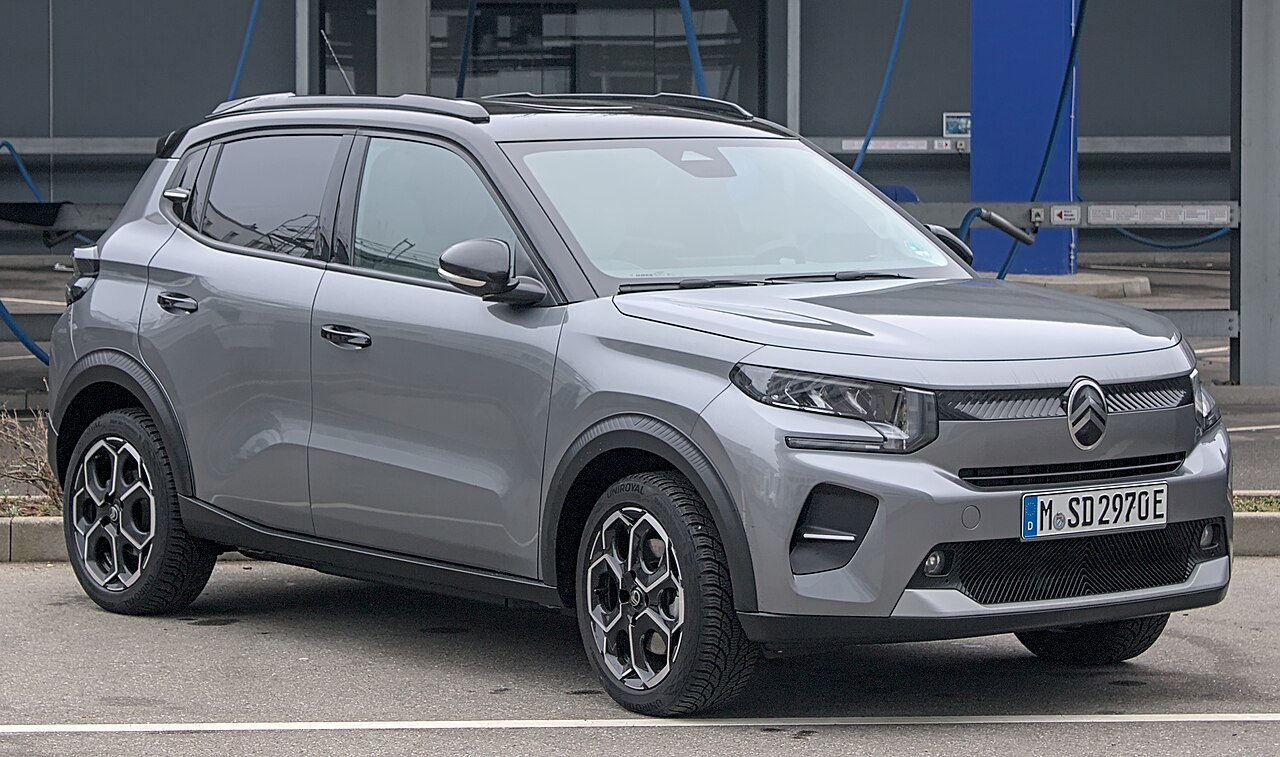
Citroën ë-C3 photographed in Germany Photo: Alexander Migl, CC BY-SA 4.0, via Wikimedia Commons
Jeep sells the Compass, Meridian, Grand Cherokee and Wrangler in India today. The new Jeeps will span three SUV size classes and a pickup. An electric Jeep is planned, but Stellantis has not given a date, specifications or a factory. Hazela did not promise a four-wheel-drive version of every model.
Citroën sells the C3, eC3, Aircross, Basalt and C5 Aircross. Its new models will be a multipurpose vehicle, an entry-level car and an SUV, along with four updates to current vehicles. Citroën will lead Stellantis’s work on CNG vehicles in India, and the electric eC3 is the near-term focus for battery power.
Stellantis plans internal combustion, hybrid, electric and CNG versions. Hazela said buying powertrains from outside suppliers is an option, and that for hybrids the company is weighing sourcing under free trade agreements as well as local and global partnerships.
The company has already put $1.16 billion into India, Autocar Professional reported. The new money goes to products, local manufacturing and the customer experience. Citroën models developed in India have reached 95% localization, including the engine and transmission, and Stellantis plans to widen exports from India to close to fifty countries.
The company starts from a small base. Jeep and Citroën together sold 10,686 vehicles in India in 2025, according to the Federation of Automobile Dealers Associations. That is 0.24% of the 4.475 million passenger vehicles sold. Wholesale sales of the two brands rose 64% to 2,920 vehicles from April through July 2026, according to the Society of Indian Automobile Manufacturers.
For executives weighing India, the plan shows a global carmaker committing money to local engineering and sourcing in a market where it holds a small share today.


