
Belden, the networking equipment maker headquartered in St. Louis, Missouri, is expanding local manufacturing capacity at its existing facility in Pune, India, to build Ethernet switches for its Ruckus Wireless business, according to Business Standard.
The move follows Belden’s $1.8 billion acquisition of Ruckus Wireless and marks a break from how Ruckus used to operate: the business relied entirely on outsourced manufacturing before joining Belden. Now it is using Belden’s own 300,000-square-foot Pune facility to build products locally for the first time.
Bart Giordano, senior vice president and general manager at Ruckus Networks, said the first locally made switches were already coming off the line. “The first batch of locally manufactured switches is set to roll off the assembly line as we speak,” he said in a virtual interaction with Business Standard. Giordano did not disclose specific investment figures or capacity targets, saying the added output will serve domestic demand for now, with export opportunities under evaluation for later phases.
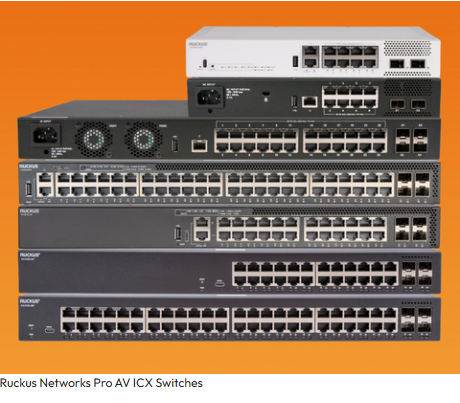
The Pune line is starting with the Ruckus ICX Ethernet switching portfolio, which the company says generates nearly half of Ruckus’s total business. Belden plans to add investment and expand its local workforce as manufacturing scales up, and it is evaluating whether to bring other networking products onto the same line later.
The expansion builds out a fuller India presence for Ruckus beyond manufacturing. Bengaluru is already the company’s largest global site for research and development and customer success, and also hosts Belden’s customer innovation center. In Chennai, Ruckus runs a research and development center (a Global Capability Center or GCC) with the IIT Madras Research Park on software development and networking. Beyond enterprise networking, the combined Belden and Ruckus business is also looking at industrial customers in manufacturing, warehousing and logistics.
For American manufacturers weighing whether to build in India or simply sell into it, Belden’s move is a small but telling data point: once a foreign company already has an India facility and a big enough local product line, moving production in-country can be a faster path to scale than opening a new site from scratch. Also significant is their plan to consider exporting from the Pune factory

