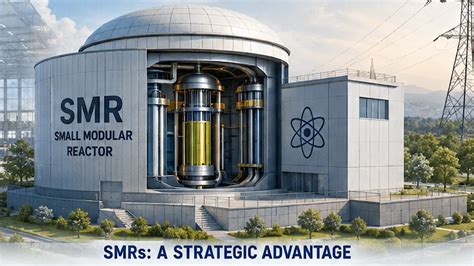
India is accelerating its nuclear energy expansion, outlining a plan to deploy at least five small modular reactors (SMRs) by 2033 as part of a broader push to cut coal dependence and scale up clean power.
Atomic Energy Minister Dr. Jitendra Singh told lawmakers that the country is developing three SMR designs, led by the Mumbai‑based Bhabha Atomic Research Centre (BARC)—India’s premier nuclear research institution.
Key Developments:
Indigenous SMR Designs Underway
BARC is currently working on:
- A 220‑MW Bharat Small Modular Reactor for grid-scale electricity
- A 55‑MW compact reactor for flexible power generation
- A high‑temperature gas‑cooled reactor designed specifically for clean hydrogen production
- A sub‑5‑MW gas‑cooled microreactor to serve as a dedicated heat source for hydrogen systems
These designs position India to use SMRs not only for electricity but also for industrial decarbonization, especially in sectors that are hard to electrify.
Policy Shift: Private Sector Now Allowed in Nuclear Energy
In a major policy change, India enacted the SHANTI Act (2025), opening the nuclear sector to private companies for the first time. The government has already committed over $2 billion to SMR development, signaling long-term investment in next‑generation nuclear technologies.
Long-Term Nuclear Expansion Roadmap:
India’s Nuclear Energy Mission outlines a dramatic scale-up:
- Current capacity: 8.78 GW
- Expected by 2031–32: ~22 GW
- Target for 2047: 100 GW — an eleven-fold increase
State-owned Nuclear Power Corporation of India Ltd. (NPCIL) will continue to operate existing reactors, but new capacity will come from NPCIL, public and private players.
Technology & Deployment Plans:
- The larger SMRs will use pressurized water reactor (PWR) technology, similar to designs being pursued in the U.S. and Europe.
- The government has shortlisted Visakhapatnam, a port city on India’s southeastern coast, as the site for the first hydrogen‑producing SMR.
Why This Matters for U.S. Readers
India’s nuclear expansion mirrors global trends toward modular, scalable, and lower-cost reactors. For U.S. audiences, the move highlights:
- A major emerging market embracing SMRs, a technology also being advanced by U.S. firms
- New opportunities for clean hydrogen collaboration
- A strategic shift that could influence global nuclear supply chains and climate goals
India’s plan underscores how large developing economies are turning to nuclear power to meet rising energy demand while cutting emissions — an approach increasingly relevant to U.S. policy discussions on clean energy, industrial decarbonization, and global climate cooperation