
Pharma and medical device companies are increasingly depending on India for part of their human clinical trials.
Clinical trials in India are conducted for Pfizer’s Global Pipeline Products in Oncology, Vaccines, Rare Disease, Infectious Diseases, Inflammation and Immunology as well as pediatric trials, according to its own website. Novartis states that it is running 52 trials across several hundred sites in India, citing therapy areas such as cardiovascular, oncology, immunology and neurology.
According to Invest India, a service of the Indian government, the country became the third-largest destination for conducting clinical trials globally as of 2024. Its analysis across many companies highlights diabetes, malignant neoplasms, cardiovascular diseases, respiratory diseases and digestive diseases. Communicable, maternal, perinatal and nutritional disorders are also drivers in India it says quoting data extracted from the World Health Organization published in November 2025.
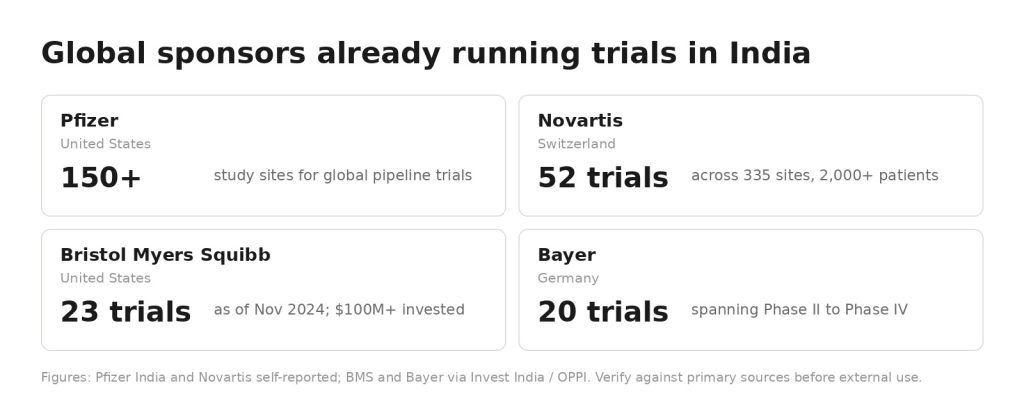
But this is not just about Big Pharma. Medium sized companies and venture-funded startups are also turning to India for part of their Phase 2 and Phase 3 trials. Here is why:
- A large, varied patient population. India is home to more than 1.4 billion people, in an enormous range of genetic backgrounds, ethnicities, and disease profiles to draw from. For trials that need to enroll quickly or recruit harder-to-find patient groups, that depth matters
- Lower costs without cutting corners. Running a trial in India can cost 30 to 45 percent less that what it does in the U.S. or Western Europe, largely because operational expenses are lower, patient recruitment is easier, and the talent pool is deep and well-trained. Sponsors stretch their budgets, and venture funds love the longer runway, while still holding to the same quality bar.
- Infrastructure that’s ready for global trials. The country has a wide network of world-class hospitals, dedicated research sites, and investigators who work to Good Clinical Practice (GCP) standards, so study results can be submitted to U.S. FDA, EMA and other western regulators.
- A regulatory system that’s easier to plan around. Reforms such as the New Drugs and Clinical Trials Rules of 2019 tightened up approval timelines and brought India’s framework closer to global norms. The practical result for sponsors is fewer surprises and a more predictable path to getting a trial up and running.
If your organization has assets entering Phase 2 or Phase 3 soon, we should talk.
Meet us at AdvaMed’s MedTech Conference in Boston, October 18-21st, 2026.
Last updated: September 14th, 2026

