
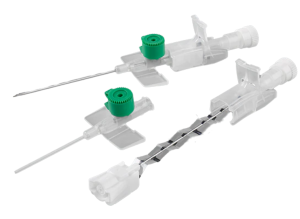
BD India, a subsidiary of New Jersey-based Medical Device company BD (formerly Becton Dickinson), is using an Indian nuclear energy lab, the Raja Ramanna Center for Advanced Technology (RRCAT), for sterilization of one of its medical devices. The device, Venflon Pro, was taken to RRCAT’s facility at Indore where it was sterilized by electron beam technology.
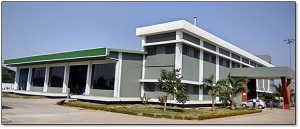
The e-beam facility is edesigned and developed in-house by scientists and engineers of RRCAT. It is the only such facility that is approved by regulatory authorities for irradiation of class A and Class B medical devices in India. It is also ISO – 13485 certified.
Jishnu Dwivedi, Head, Industrial Accelerator Section, RRCAT, said, “Electron beam is the technology accepted worldwide for sterilization of medical devices. RRCAT started working on the development of an industrial linear accelerator in 2012 and commissioned the electron beam radiation processing facility in 2020.”
Currently, medical device sterilization is dominated by two technologies – ethylene oxide gas and gamma radiation – which account for 48% and 41% of the market, respectively. Electron beam has advantages over both these processes in terms of enhanced safety and security, as well as minimal ecological effects.
RRCAT’s e-beam sterilization technology ensures a cost-effective, scalable, and efficient platform for processing medical devices and pharmaceuticals in India. With this technology, medical devices can be sterilized in their final packing stage by using the penetrating power of high-energy electrons.
Another key advantage of this technology, as compared to ethylene oxide gas and gamma radiation, is its high dose rate and faster processing time, with no residue impact.
This partnership is a defining step toward medical device manufacturers realizing the benefits of e-beam technology in the country.
Last updated: December 26th, 2025

