
Twelve percent of India’s 300 million menstruating women use sanitary napkins during their menstrual cycle. One billion commercially produced disposable sanitary napkins made by companies such as Procter & Gamble and Johnson & Johnson end up in urban sewers, landfills, as well as in rural fields and water bodies in India every month.
Because of the adverse environment impact from commercially produced pads, social enterprises and public health organizations are beginning to introduce environment friendly, biodegradable sanitary pads. Headquartered in Navi Mumbai, a city twenty miles north of Mumbai, Aakar Innovations has created Anandi, the first fully compostable pad in India.
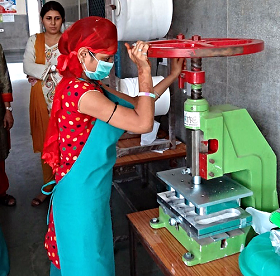
Made from sterilized agricultural waste and other natural fibers, Anandi pads are sold in rural areas and in urban slums. A pack of eight biodegradable pads is priced at 63 cents says Pratik Kumar, director of Aakar Social Ventures. “We pioneered the making and selling of fully compostable pads in 2013 and today we have 30 manufacturing units all over the country and are setting up manufacturing plants in Kenya, Tanzania, Uganda, South Africa, Rwanda, Sierra Leone, and Ethiopia,” added Kumar.
Last updated: December 26th, 2025

