
NASA scientists have plans to visit the Earth-Moon Lagrangian point, or EML-2, about 37,000 miles above the far side of the Moon, where the gravitational pull of two separate bodies creates “parking places” or stable areas to land orbiting spacecraft. There is no clear timeline to this plan yet. China plans to land on the far side of the Moon some time this year. And this summer, India plans a tricky, soft landing on an ancient high plain of the Moon, where scientists think the rock may be 4 billion years old, some 370 miles from the lunar south pole. A landing so far from the lunar equator will be a first of its kind.
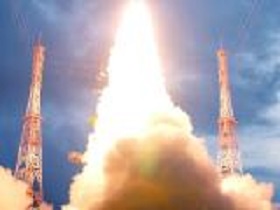
India’s ISRO the state-owned Space Research Organization is in the last phase of testing its Chandrayaan-2 mission (in Hindi, chandra means Moon, and yaan means vehicle). Chandrayaan-2 is an unmanned mission with three components: orbiter, lander, and rover, which will represent the country’s second visit to the moon. In particular, ISRO wants to to ascertain the Moon’s temperature near its poles; record moonquakes; gather data about charged particles in its atmosphere; and determine how water circulates on it. (The new mission’s predecessor, Chandrayaan-1 carried an American instrument which found the first evidence that there was water ice on the moon.)
So far, no country has been able to land on the far side of the moon, or near its shadowy poles. India wants to tackle both those firsts this year.
Last updated: December 26th, 2025

