
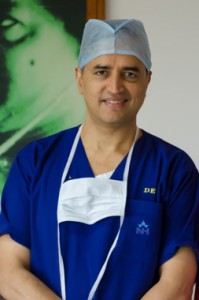
Narayana Health, a multi-discipline chain of hospitals, founded by Dr. Devi Prasad Shetty, now extends from its base in India to the Cayman Islands. In 2001 Dr Devi Shetty embarked on a plan to transform healthcare in India. From a 225-bed hospital in 2001, called Narayana Hrudayalaya (Sanskrit for ‘a home in the heart of the preserver of the universe’) Narayana Health has grown to a 7500-bed healthcare conglomerate in 2014 with 29 hospitals present in 17 cities within the country. With a razor sharp focus on efficiency and quality, the average Narayana cardiac hospital performs 40 heart surgeries a day for less than $1,600 a case. His hospitals offer patients, not only from India but all over the world, affordable and quality healthcare.

In February 2014, Health City Cayman Islands was inaugurated – a collaborative effort of the Cayman Islands, Narayana Health, and Ascension Health Alliance, the largest Catholic health-care provider in the U.S. The initial target patient population of Health City is the Caribbean and bordering countries and, by the spring of 2015, it will actively market its services to U.S. patients, insurers, employers, and perhaps the U.S. government.
Currently, Health City Cayman Islands is a tertiary care hospital that focuses on adult and pediatric cardiac surgery, cardiology, and orthopedic surgery. On the cards are cancer care and transplant services, an international medical school and a variety of residency training programs. Over the next decade it has plans to expand to a 2,000-bed hospital and expects to be a Joint Commission International, USA (JCI)-accredited facility providing care in all major specialties.
Dr. Shetty charges less than half the average U.S. price for surgical procedures. The quality of the outcomes are likely to match or exceed U.S. hospitals based on studies conducted in India according to an article in Forbes magazine.
High quality and low costs are managed by applying industrial principles and advanced technology to healthcare, using data and analytics to monitor patients’ conditions, as well as to control finance. Dr. Shetty told CIO India, “We want to create a robust IT platform to control the finance department and quality of services. We are perhaps one of the few hospitals in the world where a balance sheet is created on a daily basis. A sophisticated ERP system on a cloud solution houses financial details about all group hospitals.”
Patient-centric practices adopted in Shetty’s hospitals are the pivot for ensuring patient safety and quality care, which in turn translate into a high success rates of survival. The use of technology is another enabling factor. Each patient’s medical information is collected round the clock and is monitored closely by doctors and nurses by using Google Glass devices and Bluetooth enabled watches. Large computer screens display comprehensive medical data of each patient which doctors can access easily. The central monitoring area is staffed by experienced physicians who closely monitor post-operative video feeds of each patient during the day in the location they are in, and also for hospitals in India where it is night, since past midnight the least experienced staff are on duty. The doctors in India do the same for their patients in India as well as for patients at Health City in Cayman. The slightest suggestion of a problem is immediately communicated to the physicians in charge of the patient. While creating prescriptions, doctors calculate drug interactions using a specialized and sophisticated software to help them, and thus avoid complications due to adverse drug reactions. Staff are trained to avoid delays in diagnosis and treatment. The hospital-wide average time for an appropriate response in one of Dr. Shetty’s hospitals is seven minutes, and he wants that time to be reduced by half.
By servicing high volumes of patients across many locations, a hospital chain can take advantage of the economies of scale. They can charge less because they buy in bulk, preferably from the manufacturers rather than distributors of medical supplies, and their teams become more efficient due to the high volume and specialization involved.
“Henry Ford proved that the commoditization of a product makes it cheaper, makes it better and makes it more efficient,” said Dr. Shetty. “I strongly believe that we have to commoditize the delivery of healthcare, and that is the model that Health City represents for the world.”
The Wall Street Journal has called Dr. Devi Shetty, the “Henry Ford of Heart Surgery.” By treating so many patients and asking doctors to standardize their procedures and specialize in their strongest areas, Narayana’s surgeons are able to perform more surgeries than other hospitals in India and the U.S., while maintaining impressive success rates.
Last updated: December 26th, 2025

