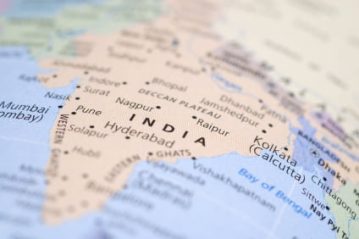
India is the second largest refiner in Asia with 21 refineries. According to India’s Ministry of Petroleum and Gas, the country produced 37.7 million tons of crude oil in 2013 and consumed 136 million tons of petroleum products. The Indian government predicts that crude oil capacity will increase by 91 million barrels by 2017.
The oil and gas industry can be divided into two major sectors:
- Upstream sector – search for and drilling of potential crude oil and natural gas reservoirs
- Downstream sector – refining process of crude oil and natural gas for consumption
As of 2014, imports constituted 80% of India’s oil consumption. India is now the third largest oil importer in the world, importing from Iran, Indonesia, Saudi Arabia and South Africa to meet the growing demand for oil, which is expected to increase 3% annually.
India‘s exports include diesel, gasoline (petrol), aviation turbine fuel, fuel oil, and naptha. The Indian government subsidizes refineries specialized for exports. It also channels investments towards export-oriented infrastructure such as pipelines and export terminals. With a majority of India’s oil reserves located offshore and the increasing exploration of deep sea oil reservoirs, the government plans to expand India’s 9,500-mile pipeline network by more than 18,000 miles by 2019 to help facilitate the trade of oil to foreign markets and the domestic distribution of oil to Indian consumers.
India-based Reliance Industries Ltd. owns the world’s largest refining hub located in the western city of Jamnagar in Gujarat. Reliance also partnered with British Petroleum (BP) to expand in the upstream sector by combining its project management expertise with BP’s deep water exploration capabilities. Reliance collaborates with Chevron, Pioneer Natural Resources, and Carrizo Oil and Gas to develop shale gas resources in the U.S.
Another domestic Indian company Essar Oil operates refineries in the city of Raniganj, West Bengal and in the state of Gujarat. It runs over 1,400 retail gas stations (petrol pumps in Indian parlance) across the country.
To encourage foreign investment, the Indian government provides incentives including excise tax cuts and 100% tax deductible exploration and drilling costs. It also allows up to 100% foreign direct investment in the private sector for infrastructural expansion, exploration of oil fields, marketing of petroleum products, and petroleum refining.
Cairn India, subsidy of Scotland’s Cairn Energy, is the largest private producer of crude oil in India. Cairn operates India’s largest private oilfield in the state of Rajasthan along with other facilities in Andhra Pradesh and Gujarat.
BP has invested $8 billion in India’s oil and gas, lubricant, and petrochemical industries. Anglo-Dutch Shell is the only foreign company with a retail license for fuel in India and manages approximately 2,000 retail gas stations within India. Shell has invested $1 billion into the sector and operates lubricant and bitumen plants across the country. It created a joint venture with Hazira LNG Pvt. Ltd., an Indian natural gas storage company.
Scotland’s BG Group and Canada’s Niko Resources focus on the upstream sector in India. Both companies succeeded through India’s New Exploration Licensing Policy, a government initiative that assigns specific areas to companies for the exploration of oil production possibilities.
Last updated: December 26th, 2025