
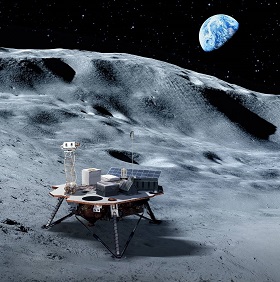
Based on the Outer Space Treaty of 1967, the Artemis Accords are a non-binding set of principles designed to guide civil space exploration and use in the 21st century. It is a NASA-led initiative to return humans to the moon by 2025, with the ultimate goal of expanding space exploration of the Moon, Mars, and beyond.
During Prime Minister Modi’s official visit to Washington in June, while addressing a joint press conference with President Biden, Modi announced that India would join the program’s 26 other signatories.
India has emerged as the next big market for space missions. It is a home to over a hundred startups developing launch vehicles, satellites and space situational awareness infrastructure. The spacefaring country has also attracted global investments and introduced regulatory changes to sketch out public-private collaboration, reports TechCrunch.
Alongside signing the Artemis Accords, India’s national space agency Indian Space Research Organization has partnered with NASA to work on a joint mission to the International Space Station in 2024. This endeavor aims to enhance the research capabilities of Indian astronauts by providing them with advanced training from NASA and granting them access to the ISS.
Additionally, India has committed to investing $318 million in the construction of a Laser Interferometer Gravitational-Wave Observatory within the country. This project will involve collaboration with counterparts in the U.S., Europe, and Japan, with the objective of detecting ripples in space-time. By studying these phenomena, scientists hope to gain insights into the fundamental origins of the universe.
Last updated: December 26th, 2025

